Faro de Punta Jandía
Visiting the Lighthouse at the End of Fuerteventura
If you’ve ever wondered what it feels like to drive to the very end of Fuerteventura, this is the place.
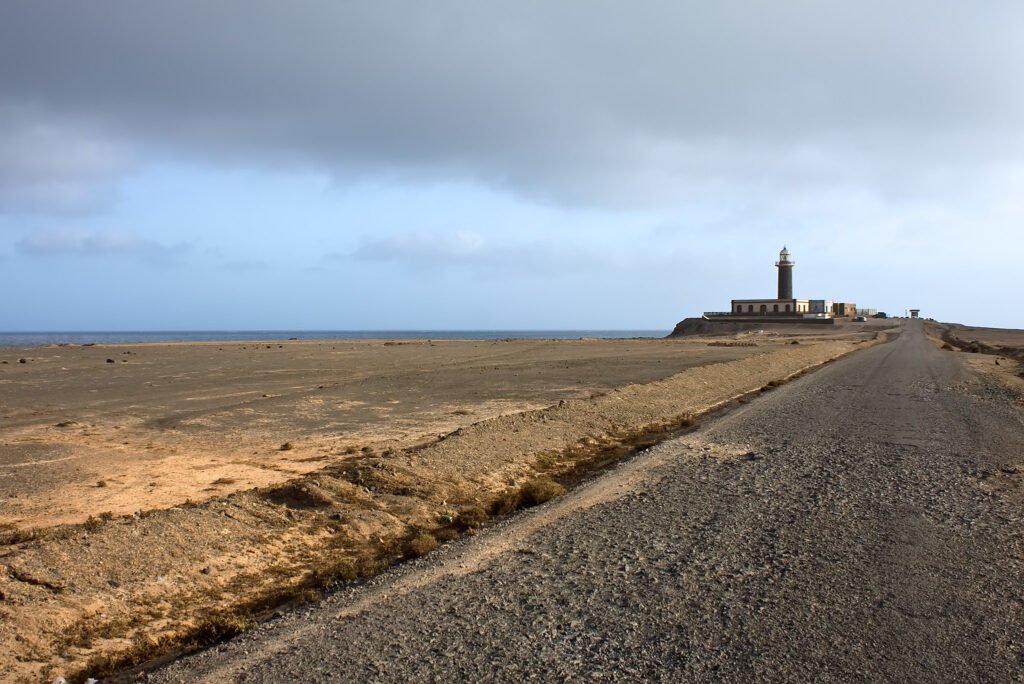
The Faro de Punta Jandía isn’t just another lighthouse, it’s one of the island’s most iconic landmarks. Standing proudly on the rugged southern tip of the Jandía Peninsula, it’s surrounded by wild coastline, crashing Atlantic waves and some of the most dramatic scenery you’ll find anywhere in Fuerteventura.
Getting there is part of the adventure, and trust us… it’s well worth the bumpy ride.
Where is Faro de Punta Jandía?
The lighthouse sits at the southernmost point of Fuerteventura, inside the beautiful Jandía Natural Park. From here, there’s nothing but the Atlantic Ocean stretching towards Africa.
It’s around 20 kilometres from Morro Jable, but don’t let the distance fool you. The road isn’t fully paved, so the journey takes much longer than you’d expect. Think slow and steady rather than Formula One.
The Drive is Half the Fun
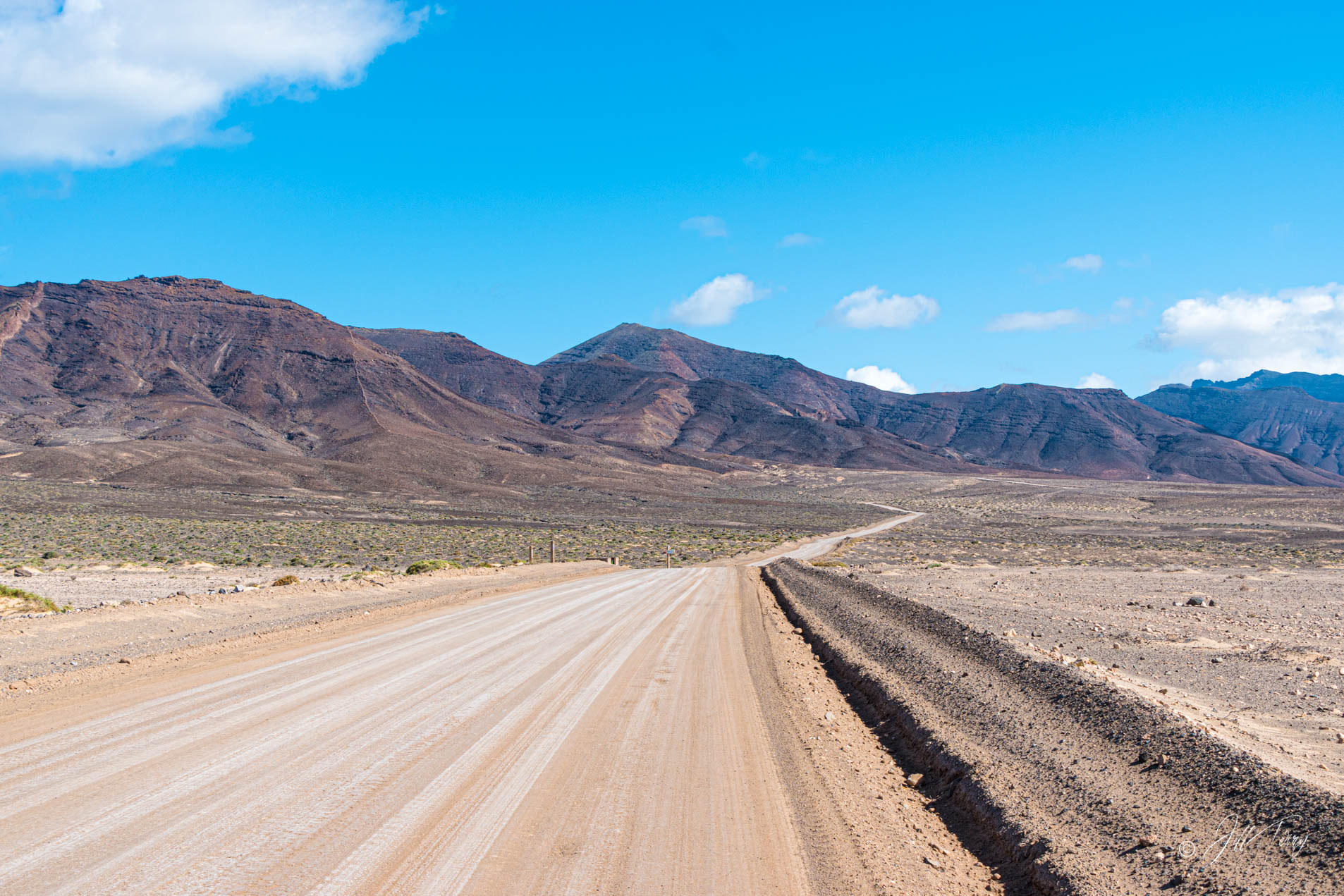
Once you leave Morro Jable, the smooth tarmac soon gives way to a long gravel track winding through one of the island’s wildest landscapes.
You’ll pass volcanic hills, empty beaches, wandering goats and plenty of viewpoints that will have you reaching for your camera every few minutes.
The road is generally suitable for most cars if driven carefully, but it can be rough in places. However, hire car companies advise against driving on unpaved roads, and you will not be covered by their insurance, so it’s worth checking your rental agreement before setting off.
Top tip: Drive slowly, keep your distance from other vehicles to avoid flying stones, and enjoy the scenery.
Why is the Lighthouse So Famous?
Built in 1864, Faro de Punta Jandía is one of the oldest lighthouses in the Canary Islands. For more than 160 years, it’s helped guide ships sailing between Europe, the Canary Islands and the west coast of Africa.
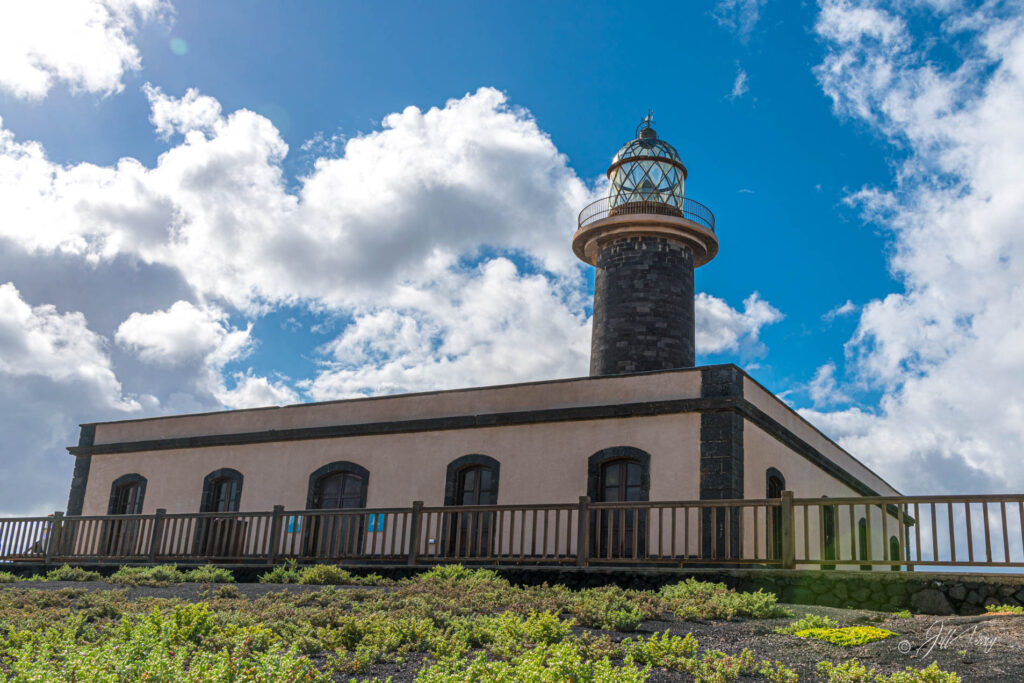
The lighthouse itself stands about 19 metres tall, with its light reaching around 22 nautical miles out to sea. These days it’s fully automated, but it remains an important navigational landmark.
It’s also incredibly photogenic, especially against the backdrop of turquoise sea and endless blue skies.
What Can You See From Punta Jandía?
Quite a lot, actually. On a clear day you may even spot Gran Canaria on the horizon. Closer to home, the views are spectacular in every direction.
Keep an eye out for:
- The endless Atlantic Ocean.
- Rugged cliffs and volcanic coastline.
- The small fishing hamlet of Puertito de la Cruz.
- Wild beaches stretching along the peninsula.
- Incredible sunsets if you visit later in the day.
It feels wonderfully remote, and that’s exactly its charm.
Is There Anything Inside the Lighthouse?
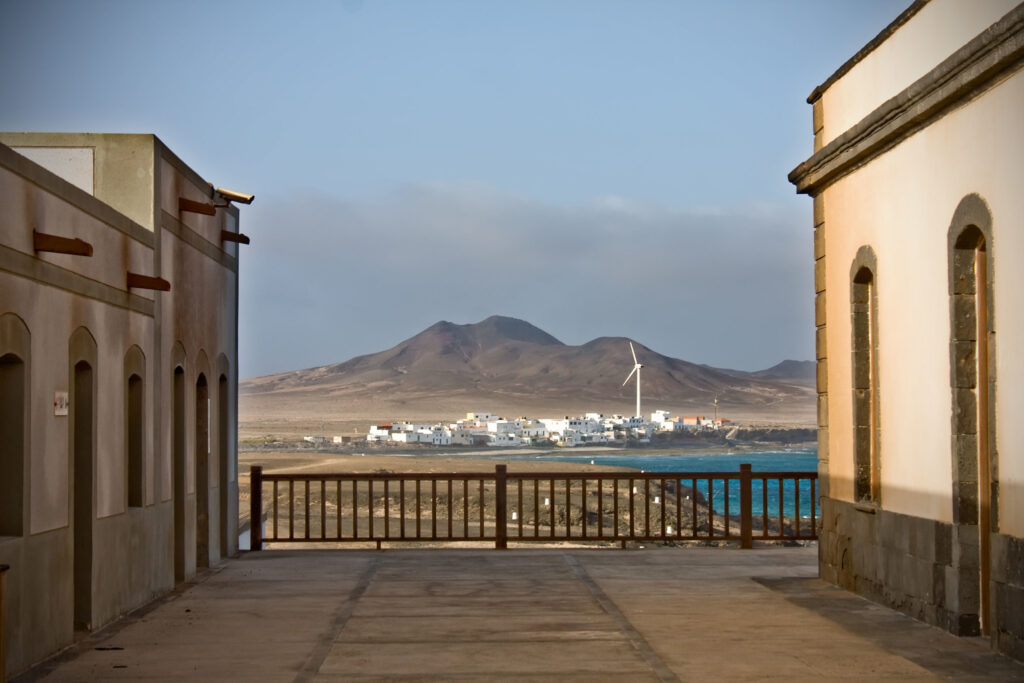
The old lighthouse keeper’s house became the Jandía Natural Park Interpretation Centre, with exhibitions about the peninsula’s geology, wildlife, marine life and unique ecosystems.
At the moment the centre is closed. Supposedly while refurbishment work is being carried out, but it is now a number of years since it was last open. Although you can still visit the lighthouse from the outside and enjoy the surrounding viewpoints.
Best Time to Visit Faro de Punta Jandía
There’s really no bad time, but each part of the day offers something different.
In the morning there will be fewer visitors and cooler temperatures
In the afternoon you’ll have bright colours and fantastic coastal views
At sunset it is the golden hour, with dramatic skies and brilliant photo opportunities
Just remember there’s very little shade, so bring water, sunscreen and a hat, the wind might keep you cool, but the sun is still strong.
Things to See Nearby
A trip to Punta Jandía is easy to combine with a few other beautiful spots.
Puertito de la Cruz
This tiny fishing village is only a few minutes away from the lighthouse and feels like stepping back in time. It’s famous for its fresh seafood and peaceful atmosphere.
Playa de Ojos
A quiet beach with clear water and hardly any crowds. Ideal if you’re looking for somewhere a little more off the beaten track.
Cofete Beach
If you’re already tackling the Jandía Peninsula, don’t miss Cofete. One of Fuerteventura’s most famous beaches, it’s wild, windswept and absolutely enormous.
Winter Airfield
Yes, there really was an airstrip! Just along the coast is the airstrip built by Gustav Winter in about 1930. Of course it’s abandoned now and there is very little left to see, but you can just make out the runway if you look carefully.
Wildlife Around Punta Jandía
Nature lovers should keep their eyes open.
The surrounding natural park is home to some of Fuerteventura’s unique wildlife, including:
- Barbary ground squirrels.
- Berthelot’s pipits.
- Hoopoes (Abubillas).
- Egyptian vultures soaring overhead.
- Lizards and plenty of coastal birdlife.
If you’re lucky, dolphins and even whales have occasionally been spotted offshore around the peninsula.
And of course you can’t forget the goats that wander across the plains and climb up, down and around the mountains.
Tips Before You Go
- Fill up with fuel in Morro Jable before leaving.
- Take plenty of drinking water.
- Wear comfortable shoes if you want to explore the coastline.
- Mobile signal can be patchy in places.
- Don’t rush the drive – the views are part of the experience.
Is Faro de Punta Jandía Worth Visiting?
Absolutely.
Faro de Punta Jandía isn’t about cafés, shops or busy attractions. It’s about experiencing one of the wildest corners of Fuerteventura, where the island simply runs out and the Atlantic takes over.
Whether you’re chasing sunsets, photographing landscapes, exploring hidden beaches or just fancy saying you’ve reached the end of Fuerteventura, this lighthouse is a place you’ll probably remember long after your holiday is over.