Betancuria
A Guide to the Island’s Most Beautiful Historic Town
If Fuerteventura had a storybook town, Betancuria would be it.
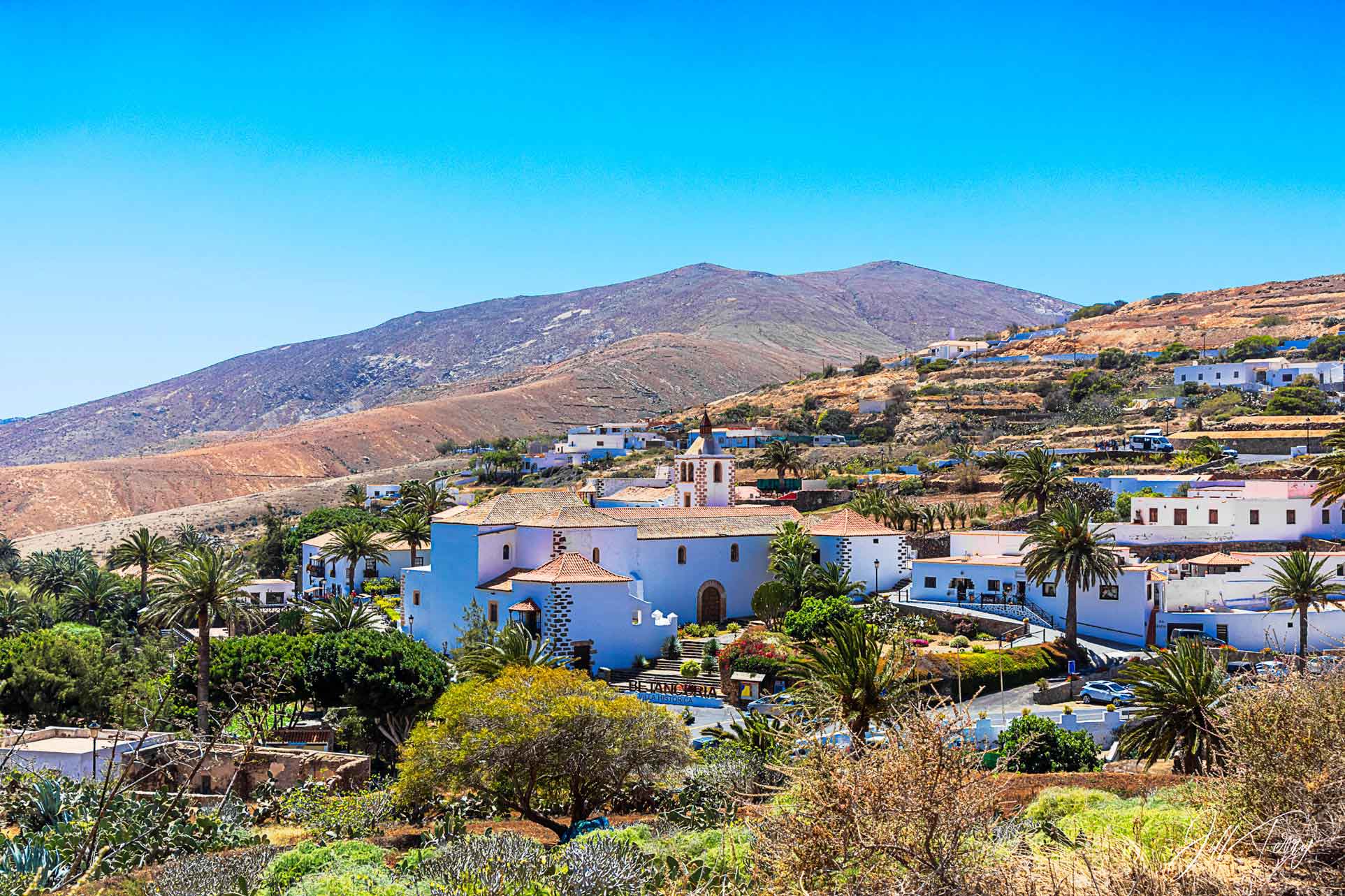
Tucked away in a green valley surrounded by mountains, Betancuria feels completely different from the beach resorts the island is famous for. Whitewashed houses, palm trees, colourful flowers and centuries of history make it one of the prettiest places in Fuerteventura – and one that’s absolutely worth taking a break from the beach for.
Whether you’re visiting for an hour or spending the afternoon wandering its cobbled streets, Betancuria is full of surprises.
Where is Betancuria?
Betancuria sits in the centre-west of Fuerteventura, around a 30-minute drive from Puerto del Rosario and about 40 minutes from Corralejo.
Unlike many towns on the island, it’s nowhere near the coast. It was deliberately built inland, hidden among the mountains, to protect it from pirate attacks during the island’s early history.
The drive there is beautiful in itself, with winding mountain roads and spectacular viewpoints along the way. There is limited street parking in the town, and also a good sized car park at the southern end of the town.
A Little History – Fuerteventura’s First Capital
Steeped in history, the town was named after the Norman conqueror Jean de Béthencourt, who, together with Gadifer de La Salle, founded the town in 1404. Betancuria was the first settlement on the island after being conquered, and became the capital and was the political, administrative and religious headquarters for the Kingdom of the Canary Islands until 1425, when Béthencourt died and his nephew established Teguise, in Lanzarote, as the new capital.
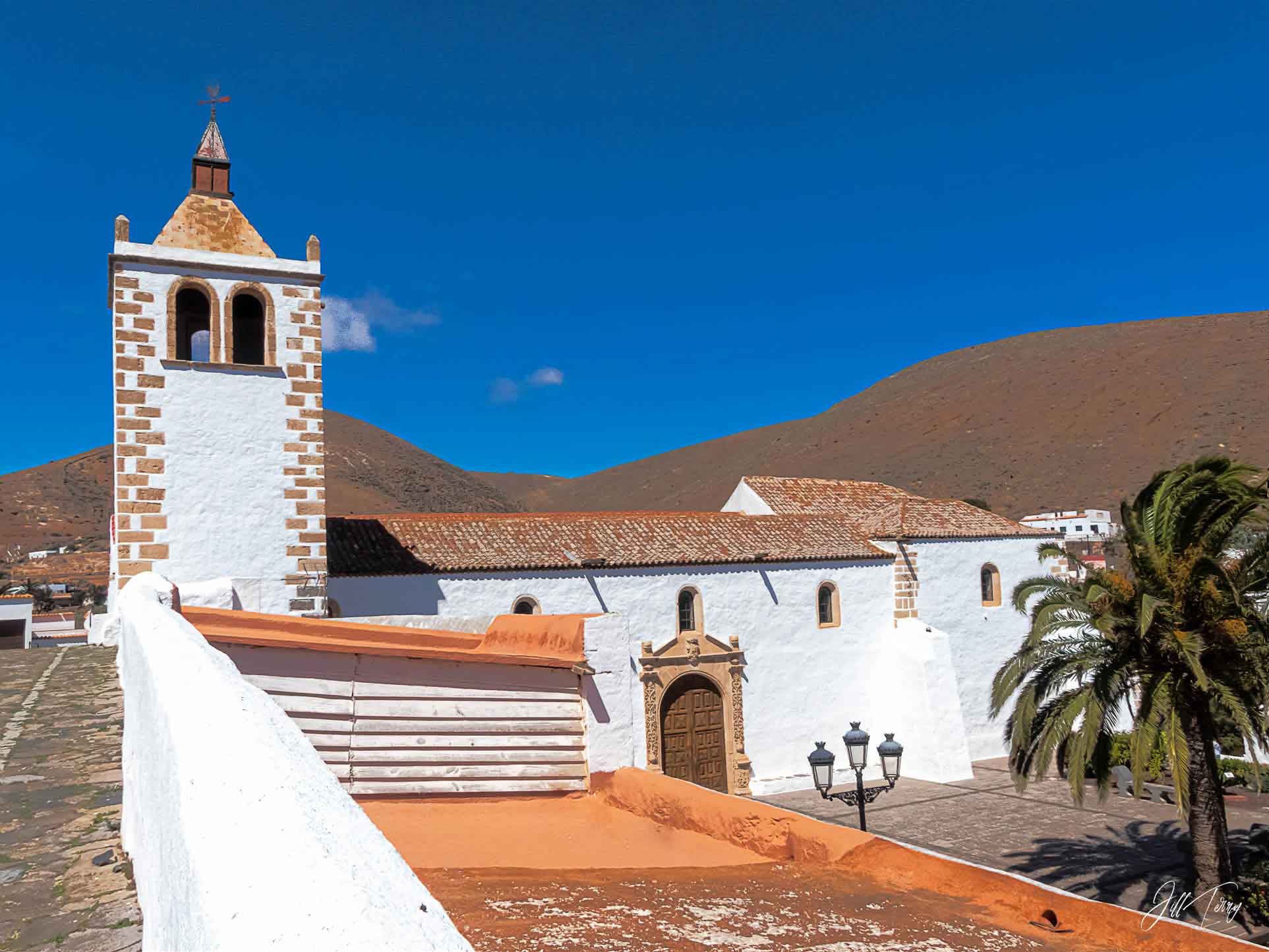
The impressive church of Santa María in the plaza, was the first church to be built on the island, and was originally consecrated as a Cathedral in 1424; however that title was removed 7 years later.
Sadly the town was razed by the Berber pirate, Xabán Arráez, in 1593. The church was mostly destroyed and its reconstruction took almost 100 years to complete.
Despite this, Betancuria remained as the capital of Fuerteventura until 1834, when Antigua became capital, having a more powerful population. Today, Betancuria is the least populated municipality in the Canary Islands.
Why Visit Betancuria?
Quite simply… it’s charming.
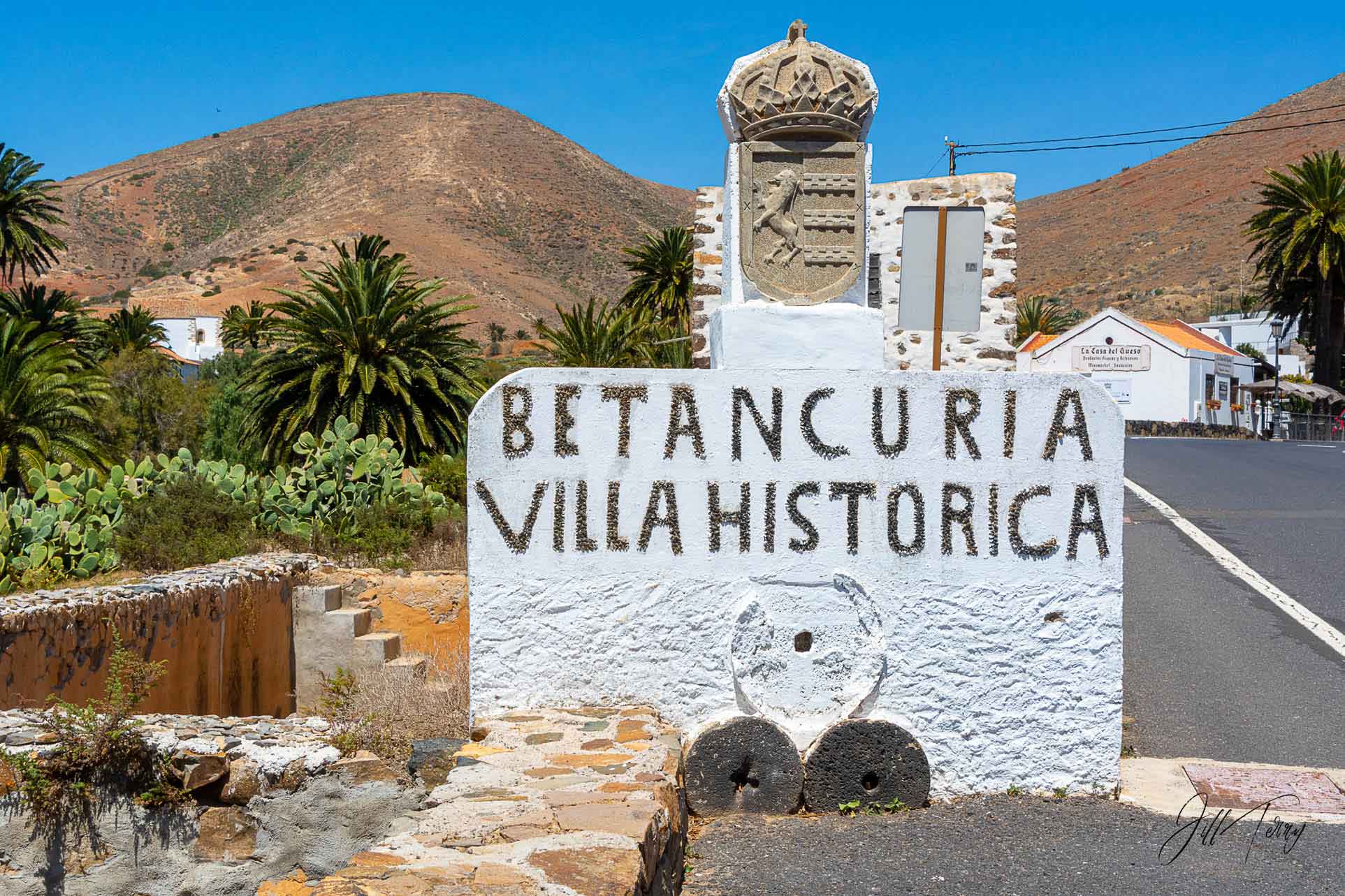
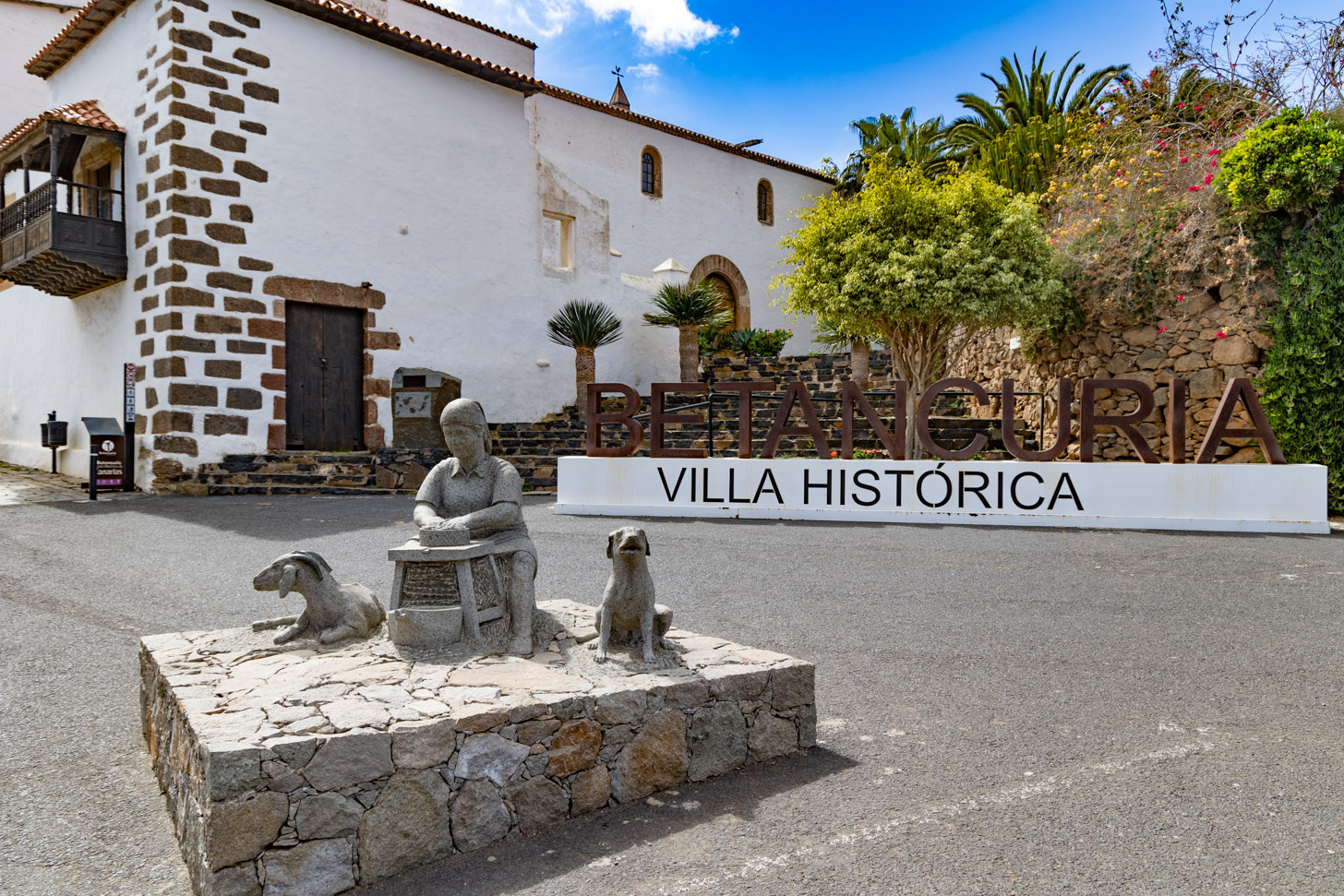
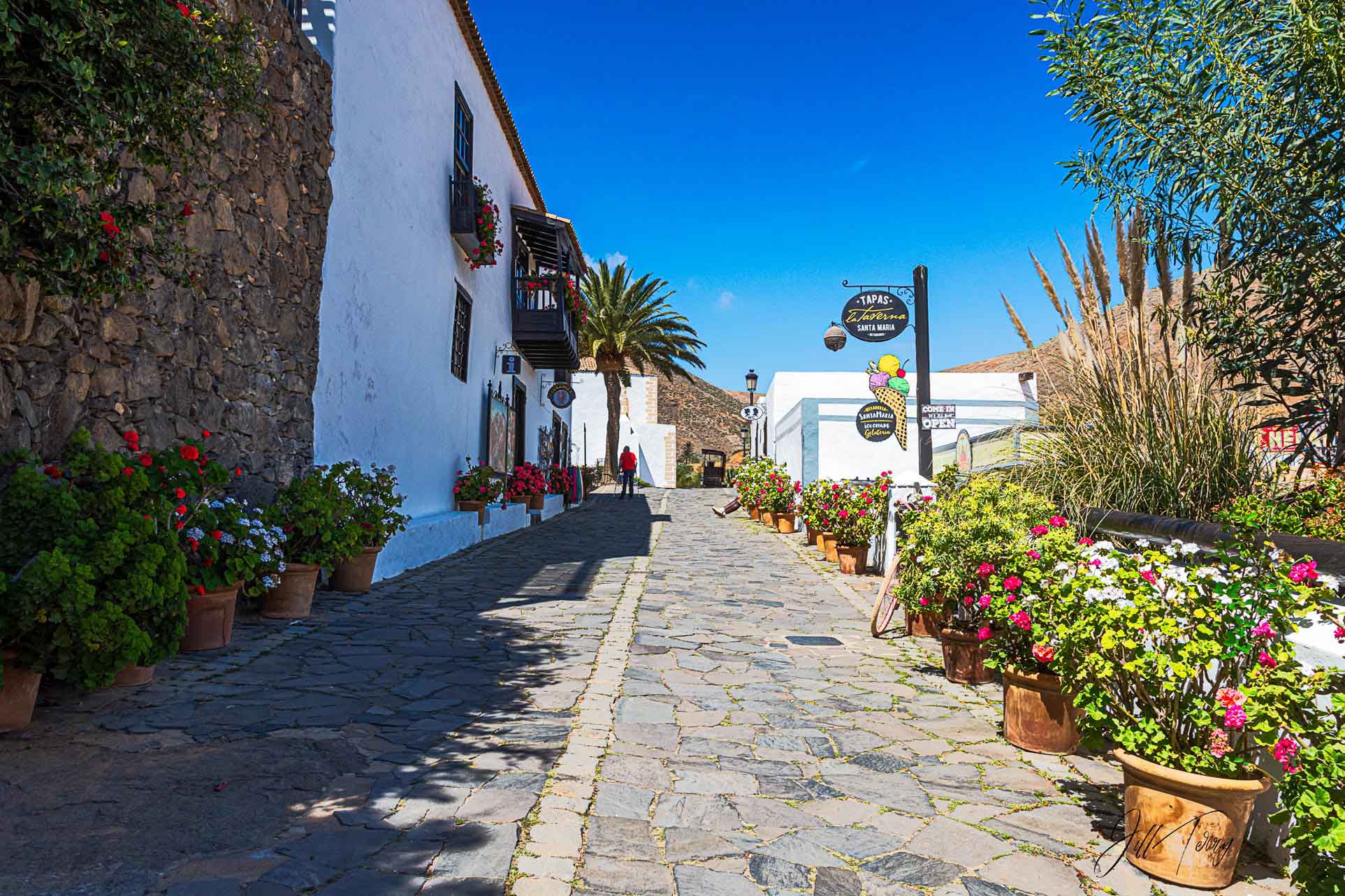
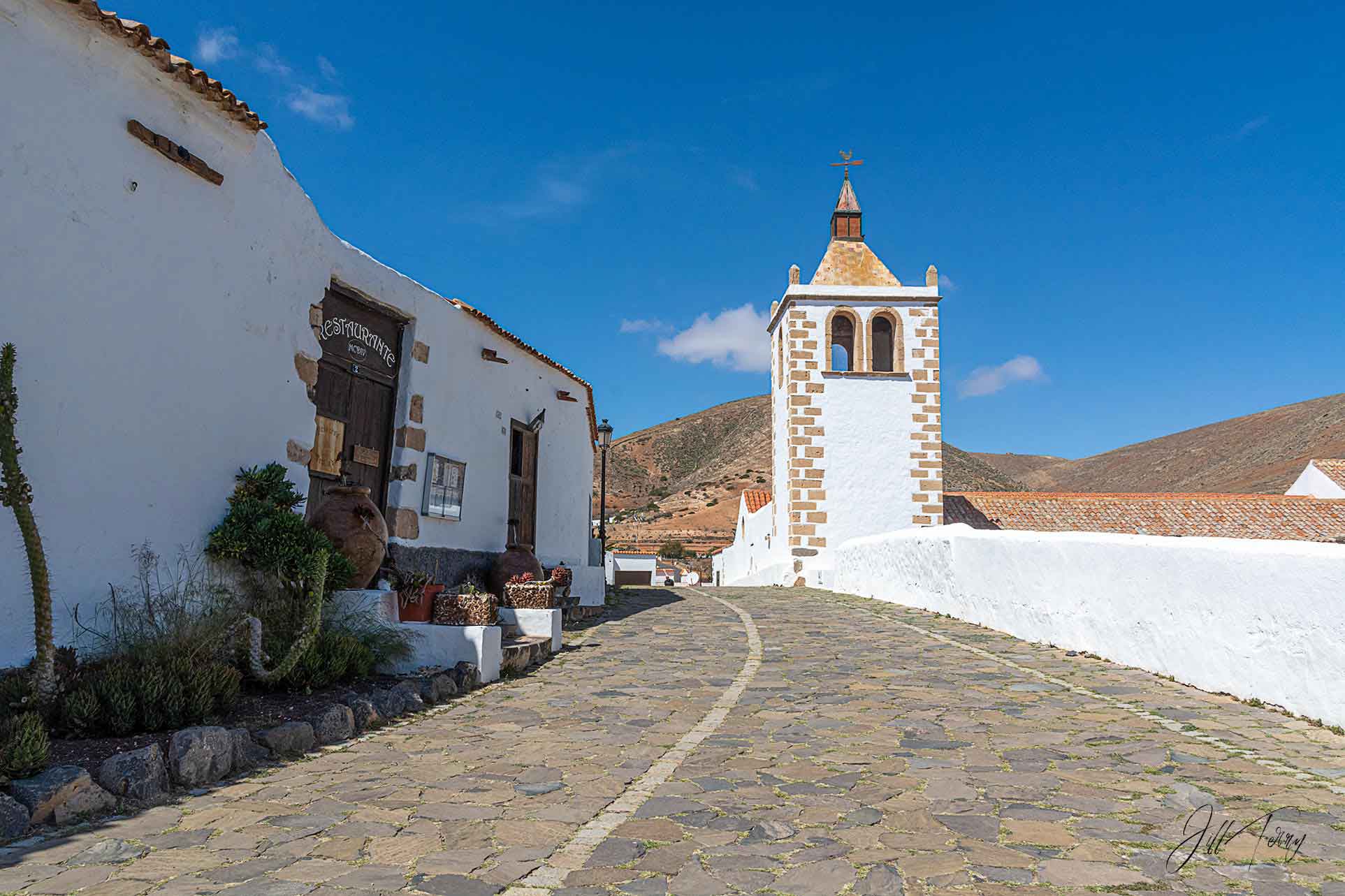
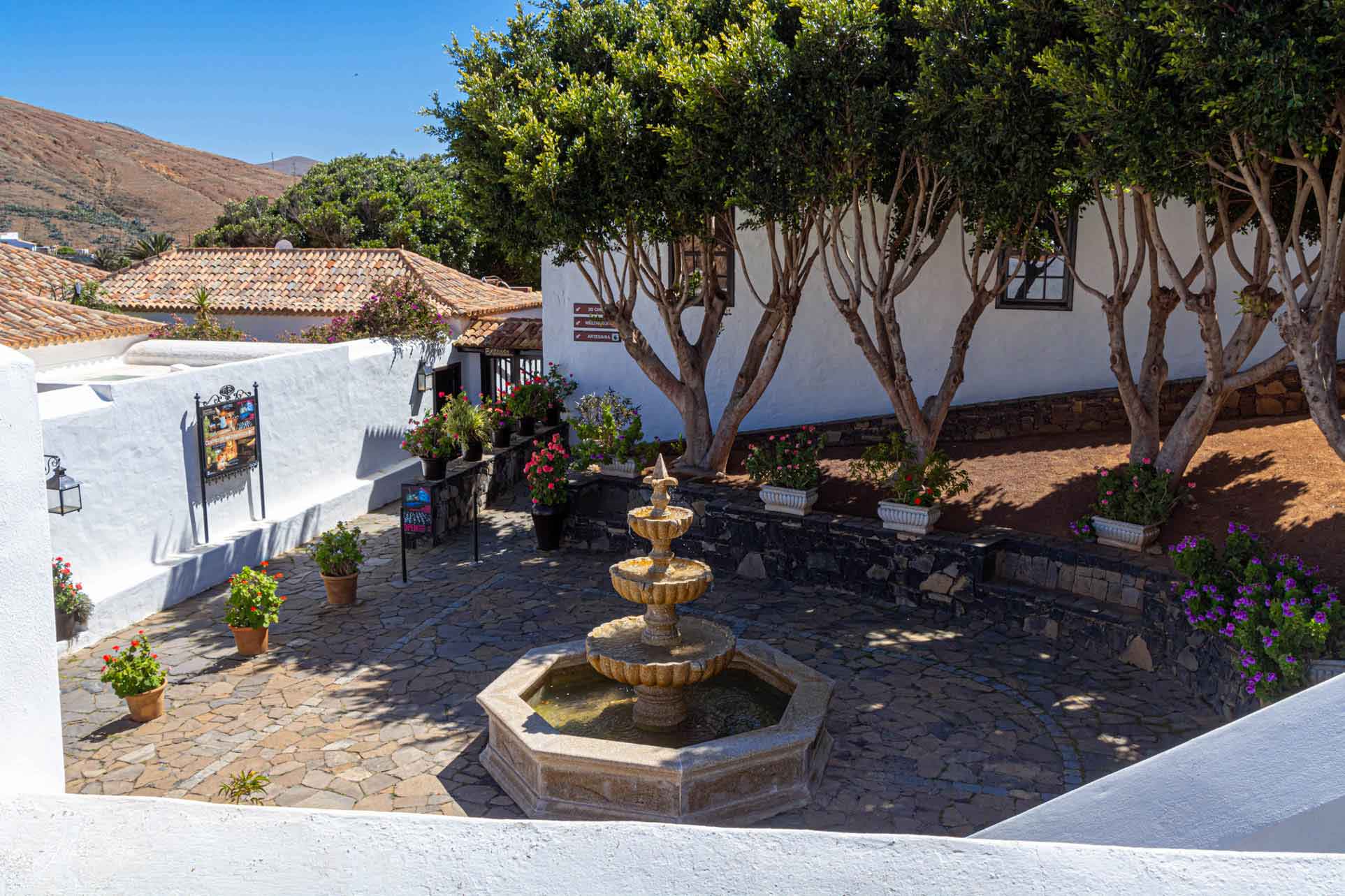
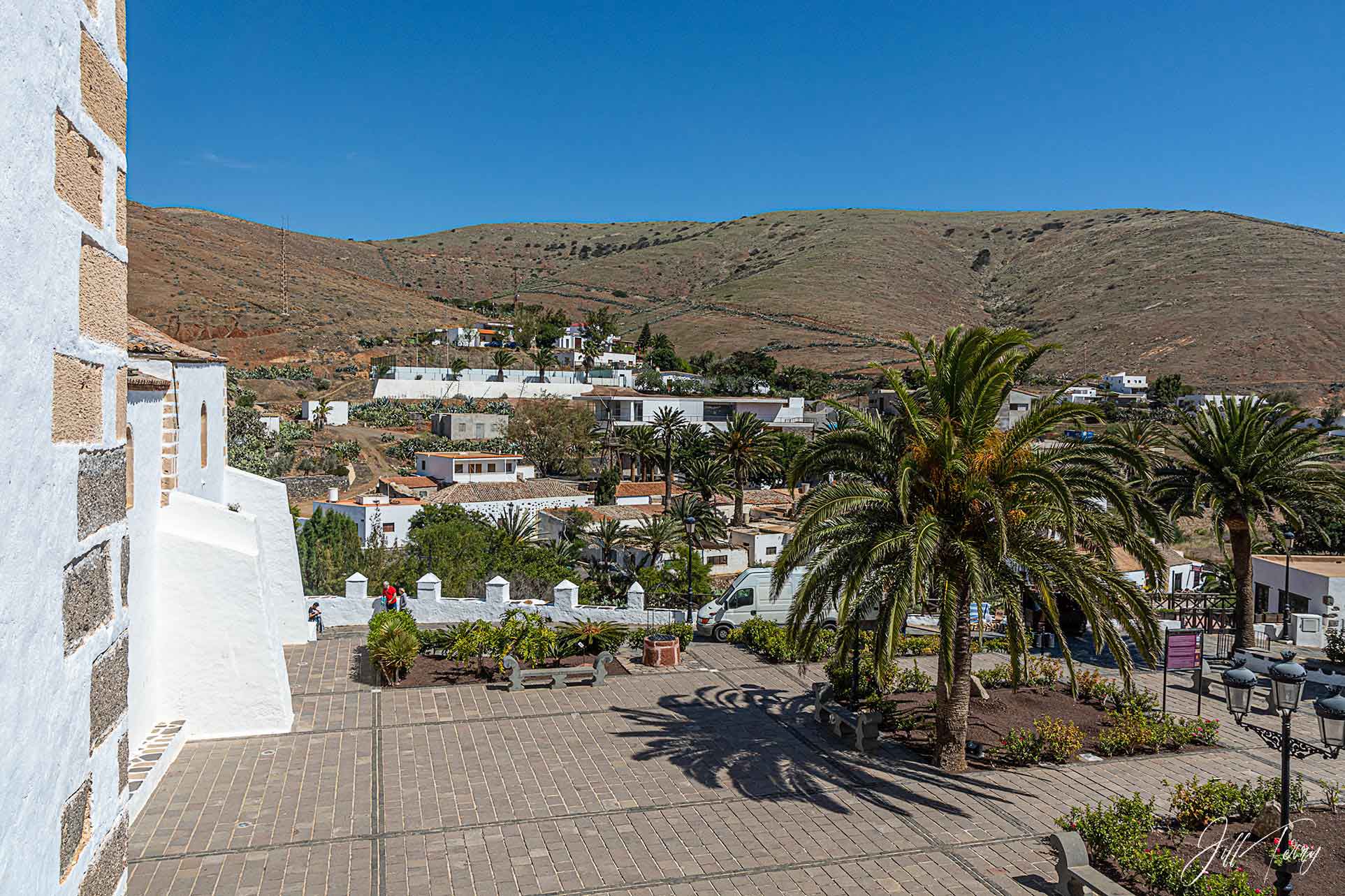
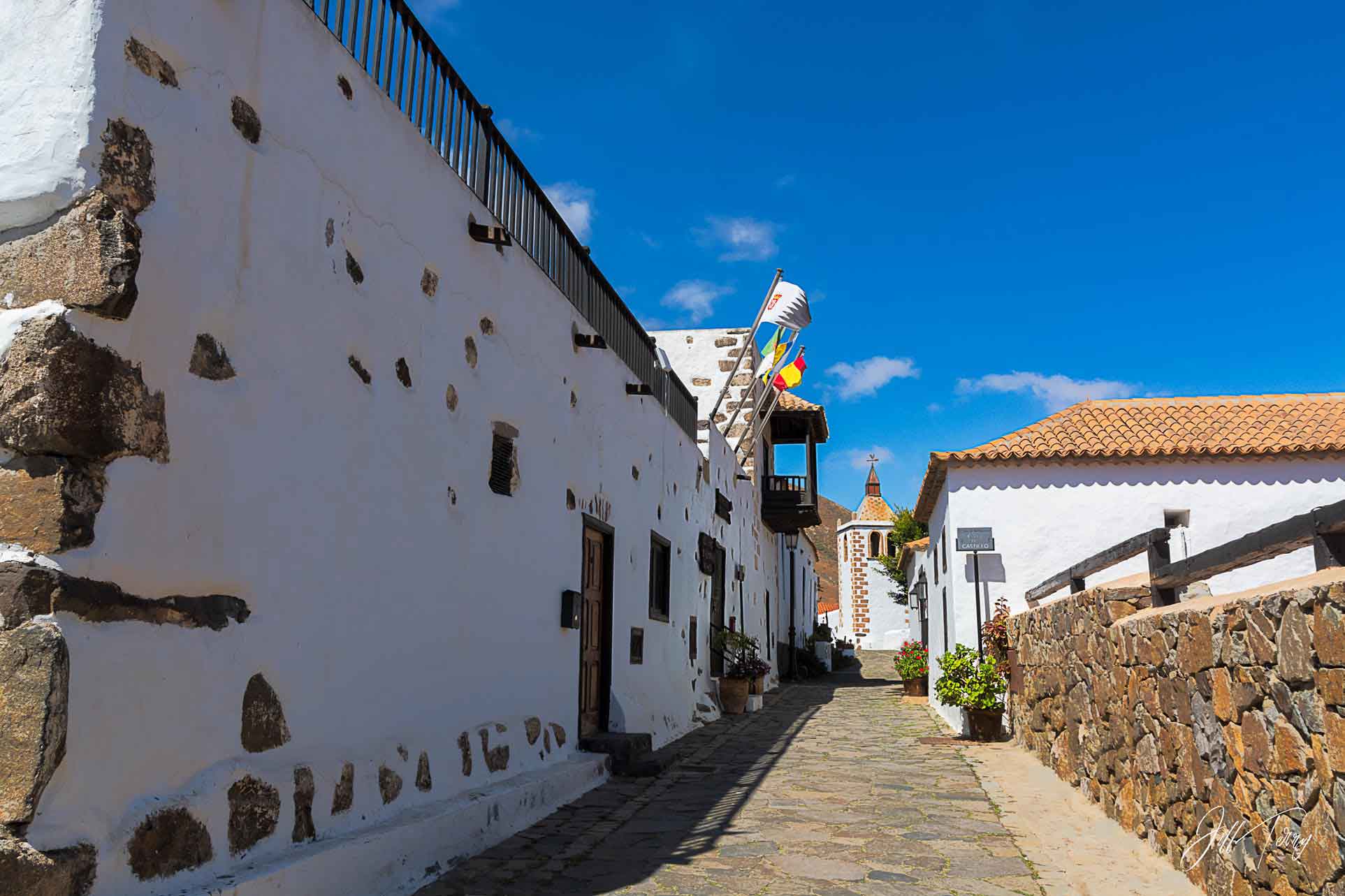
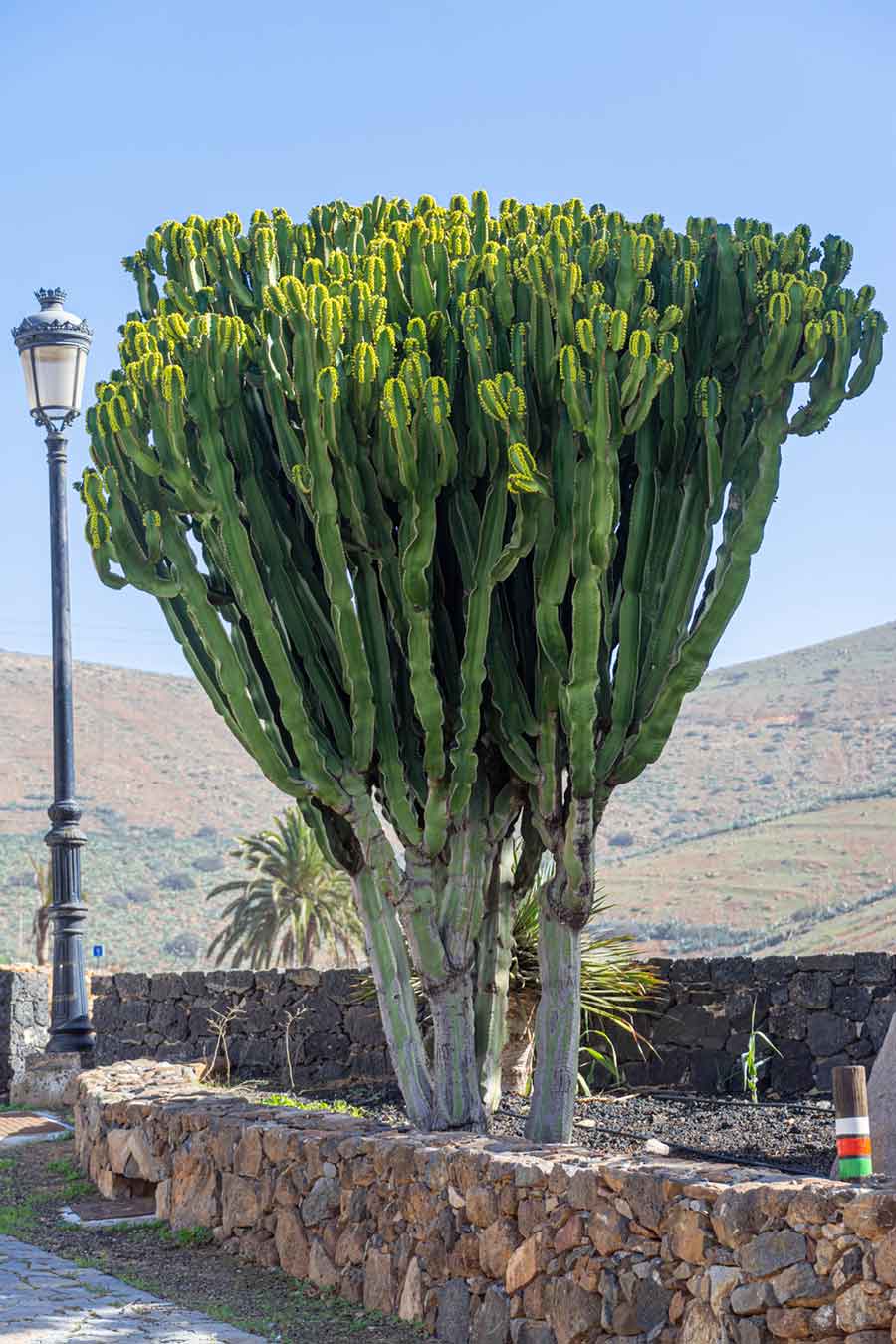
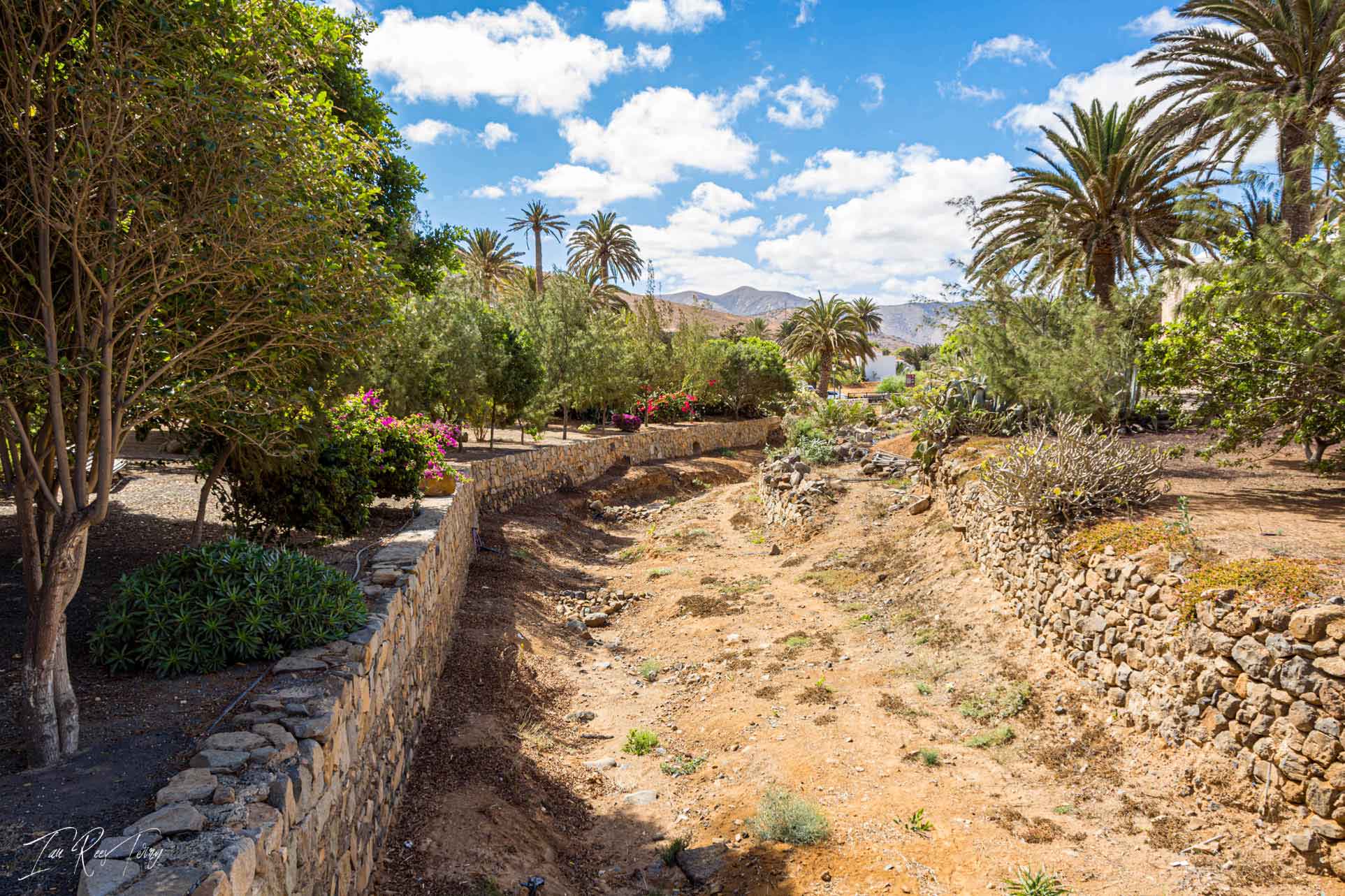
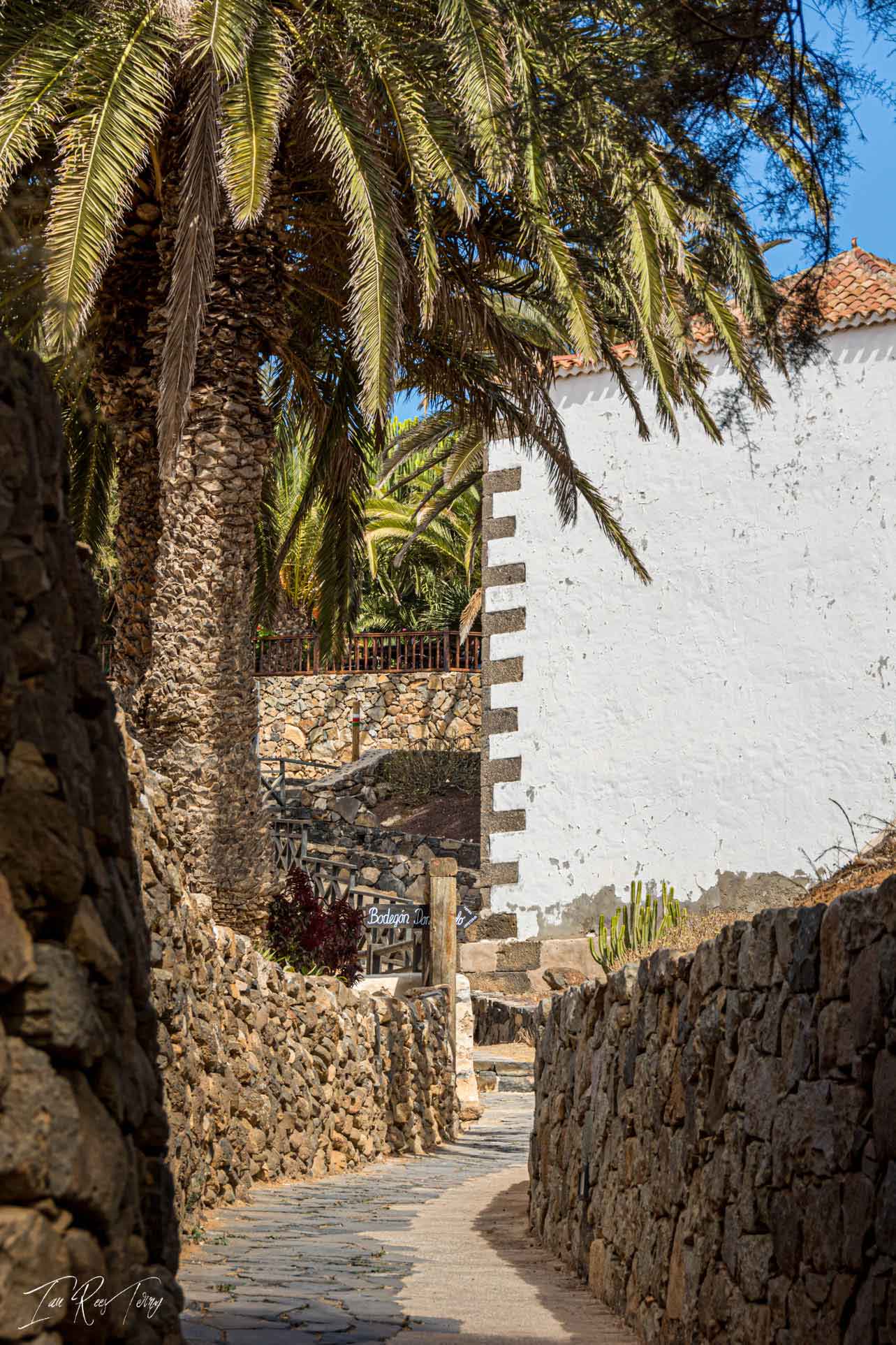
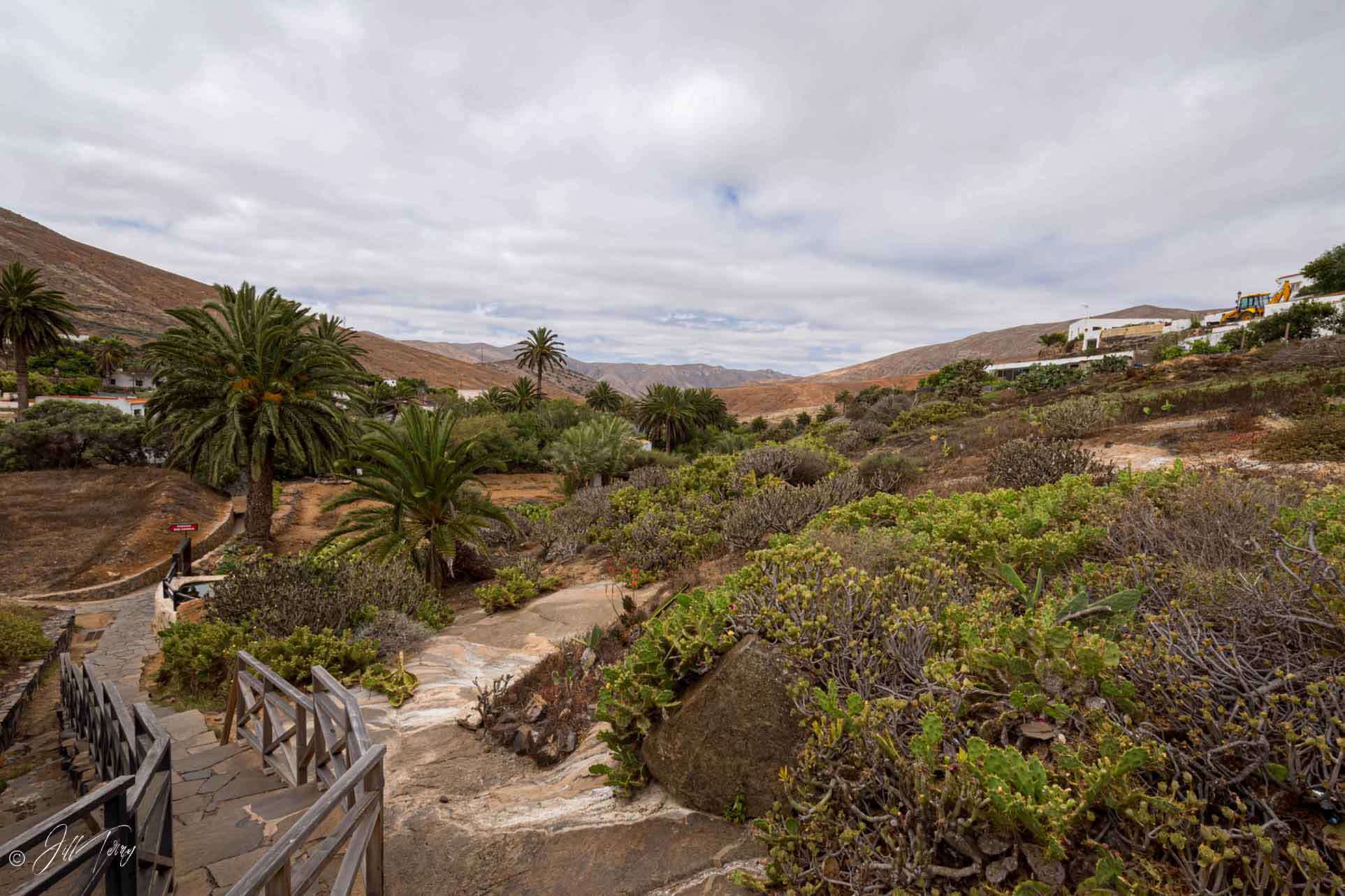
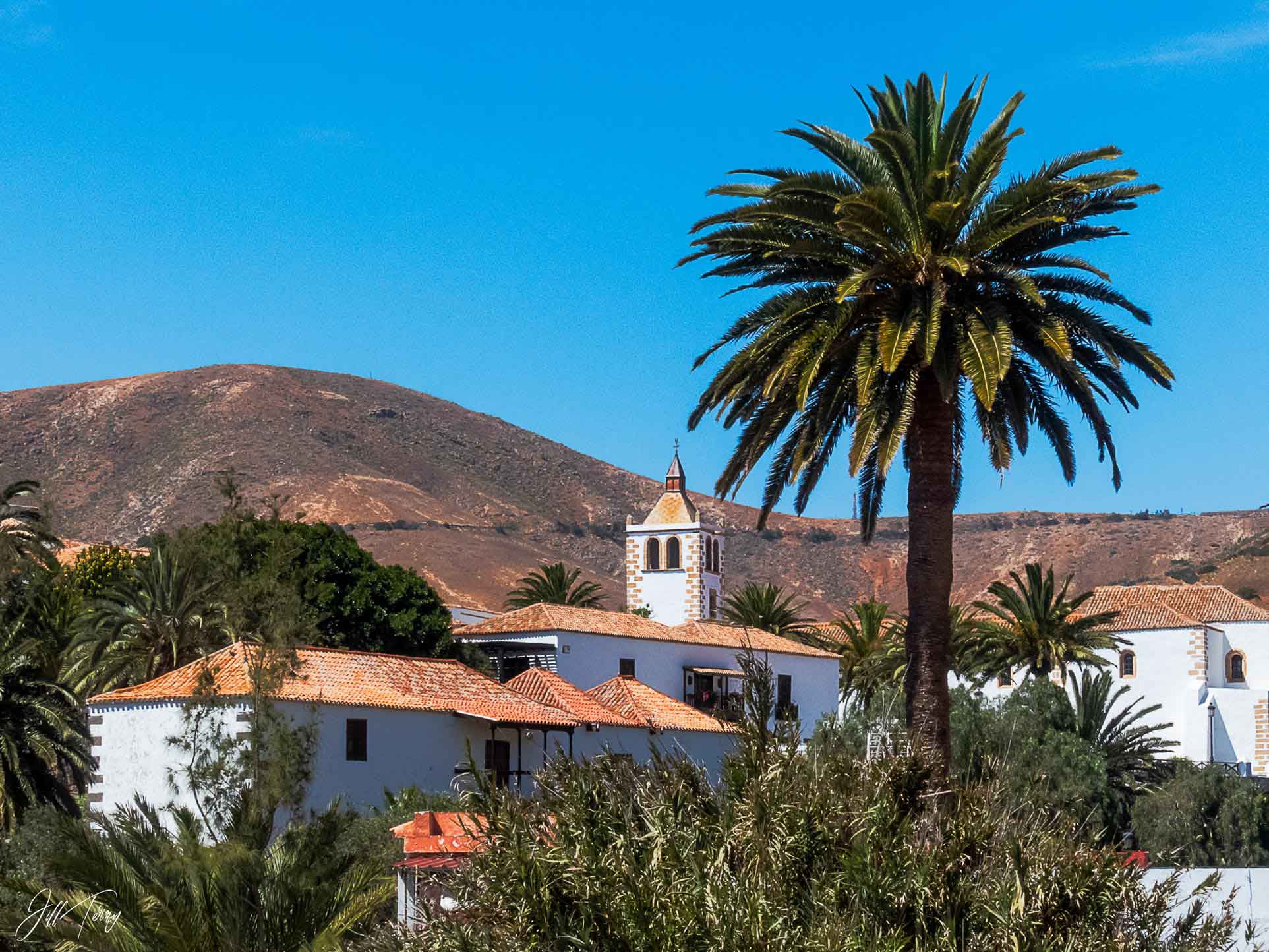
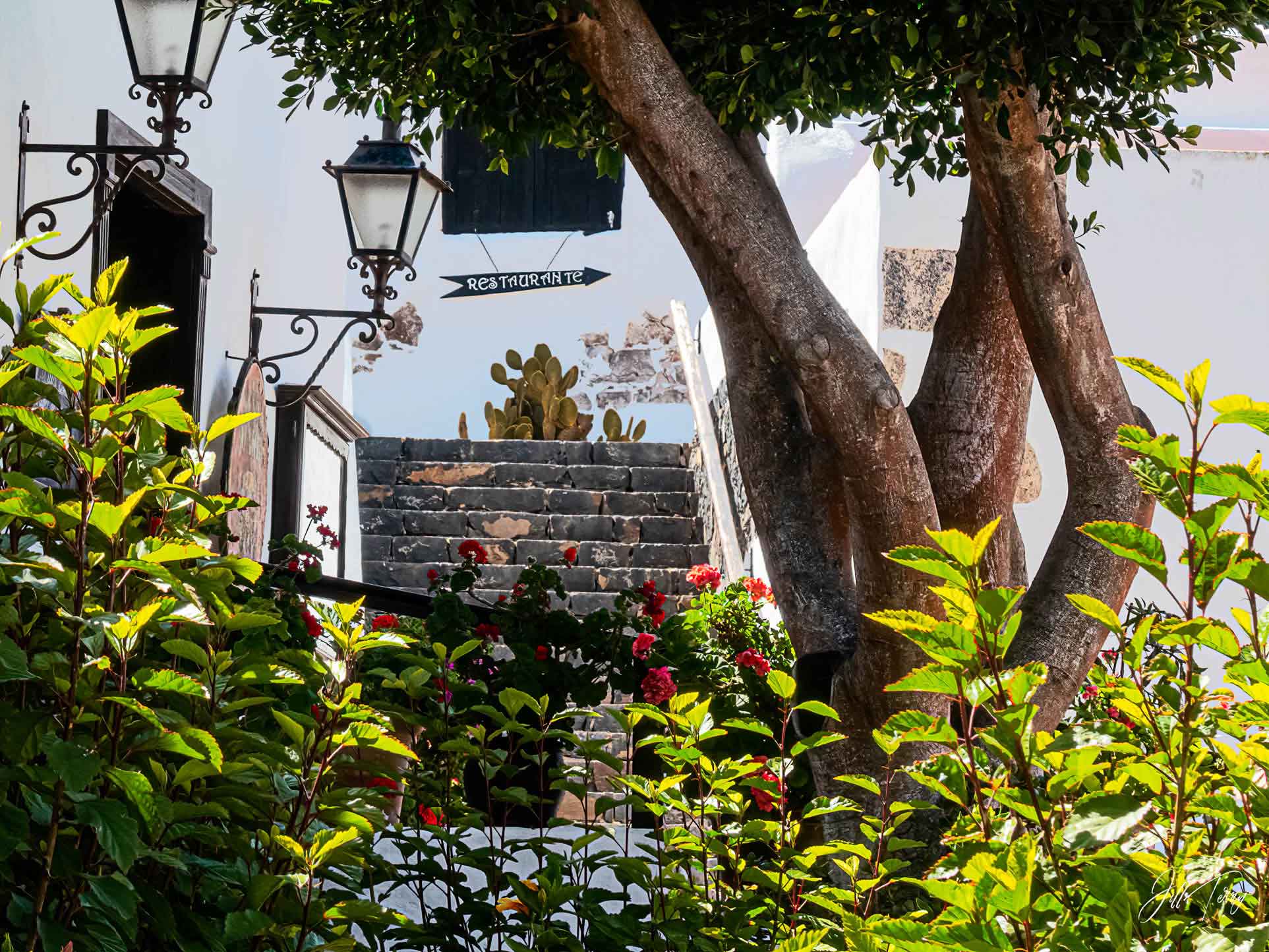
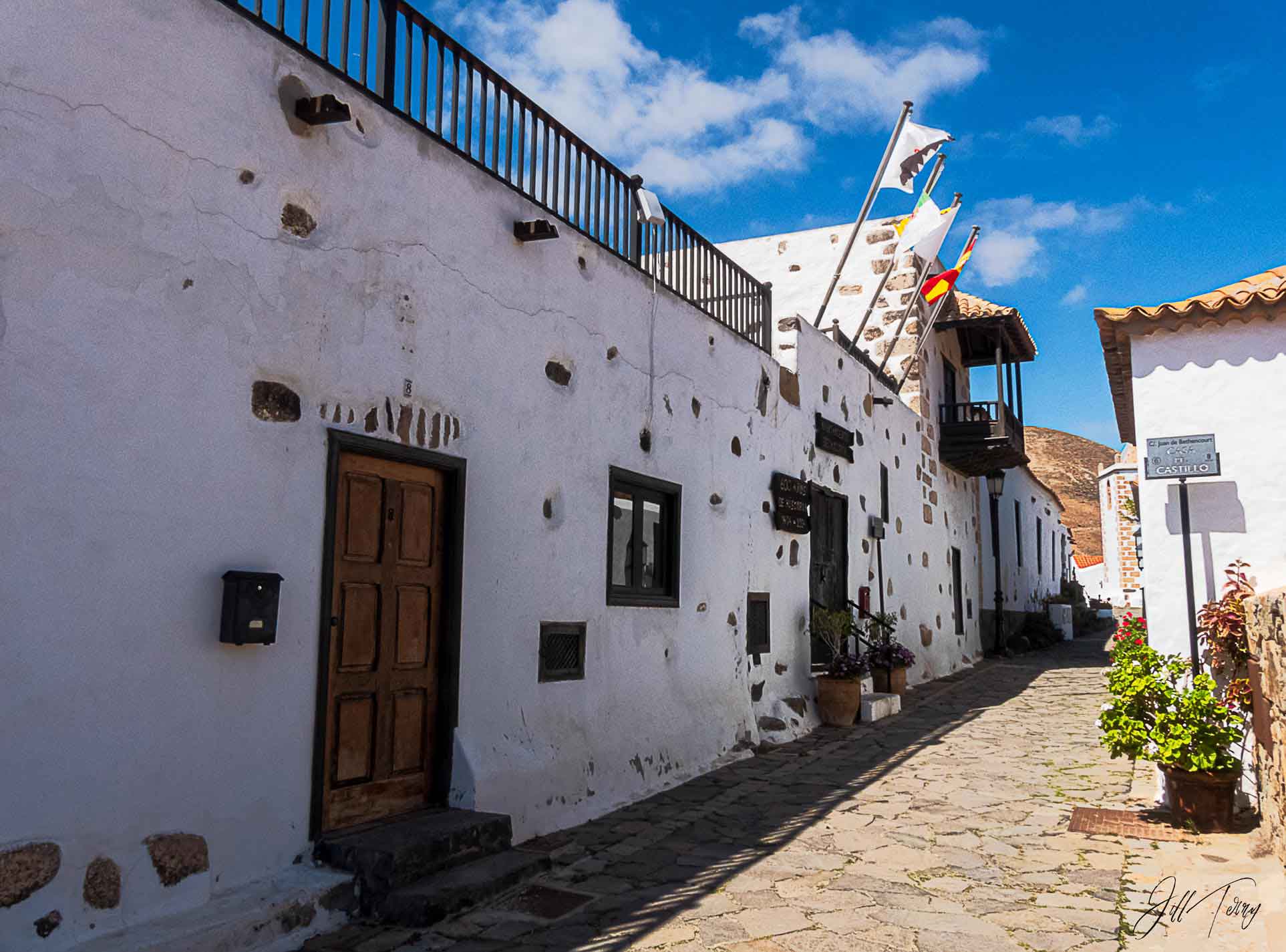
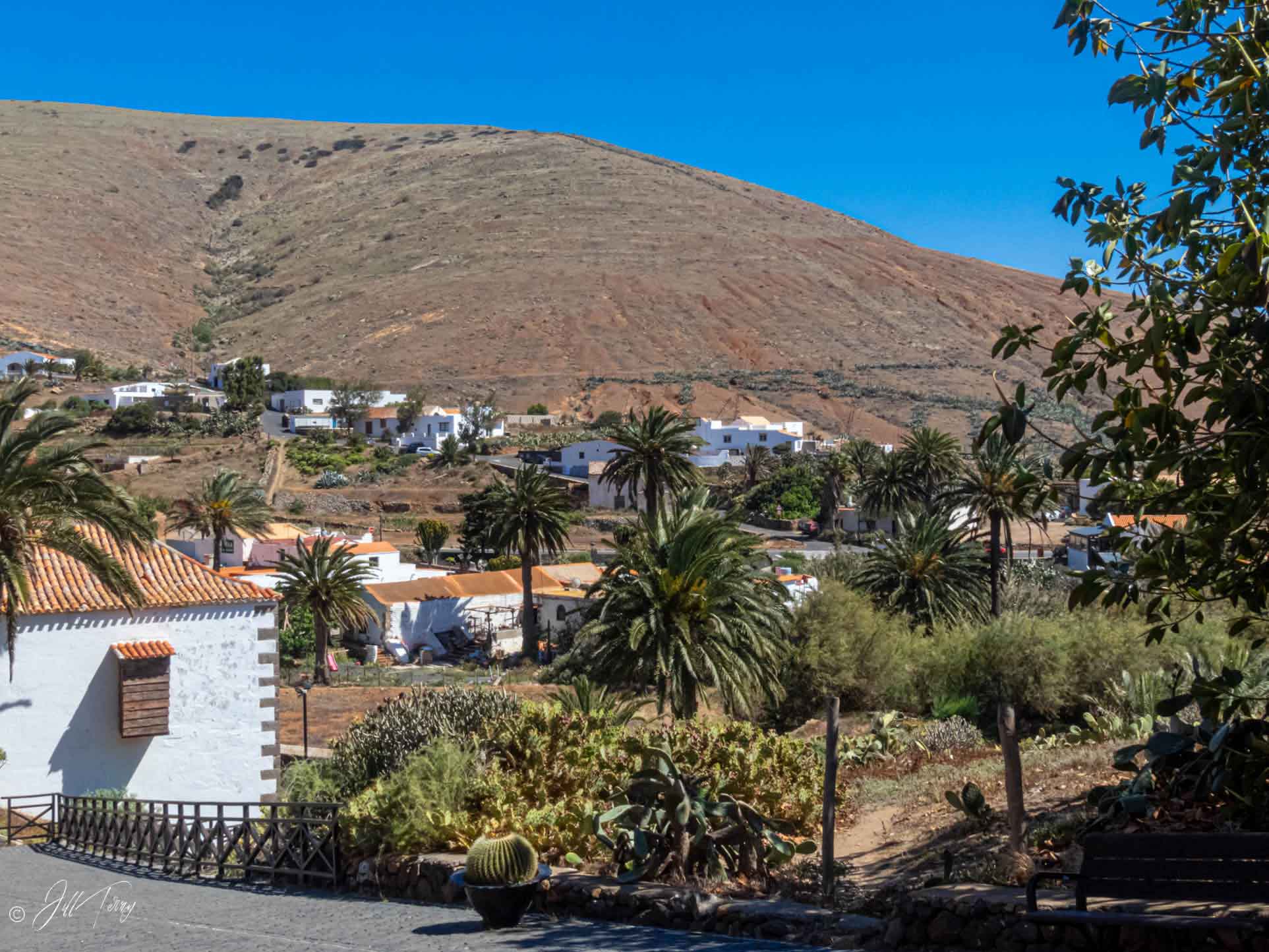
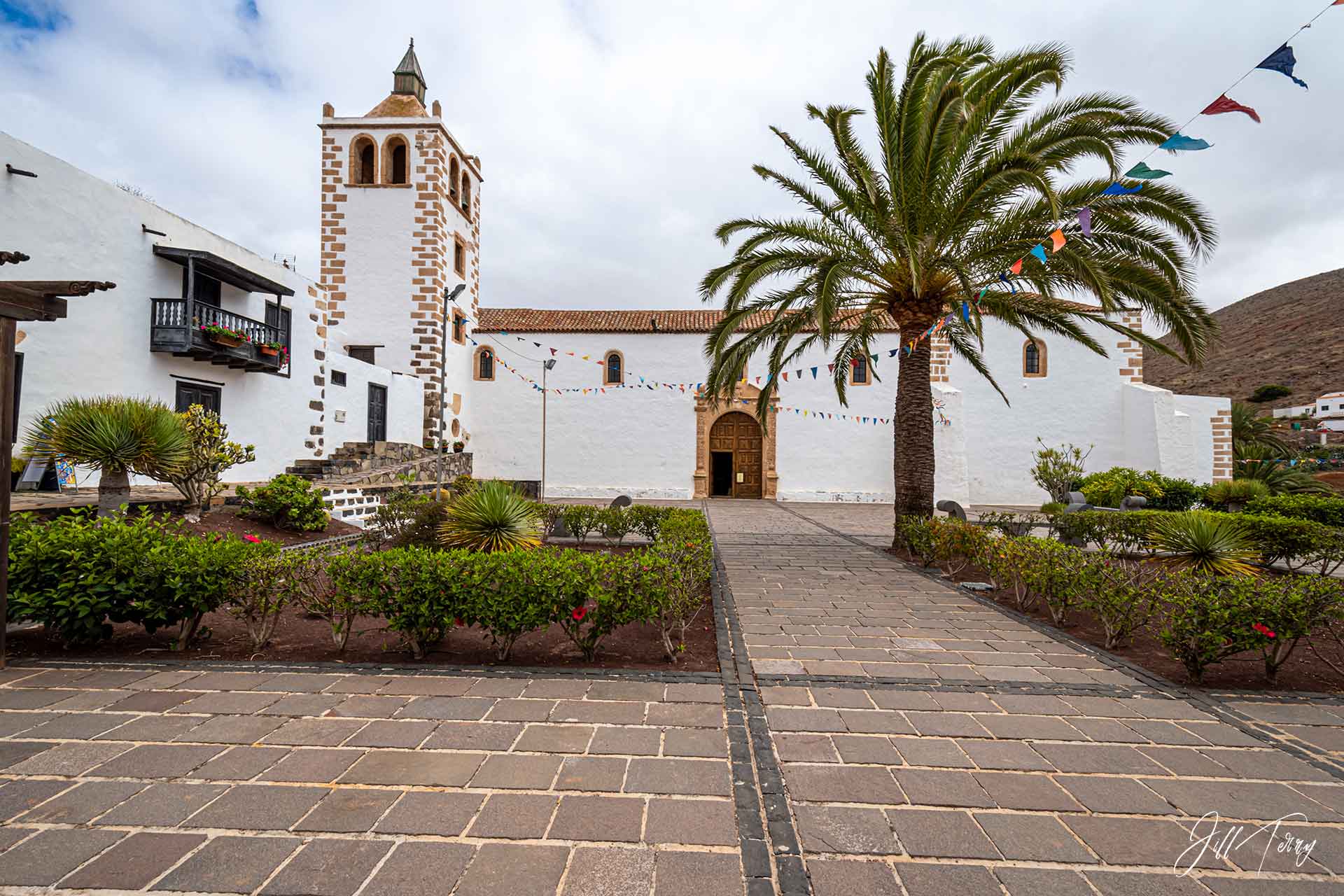
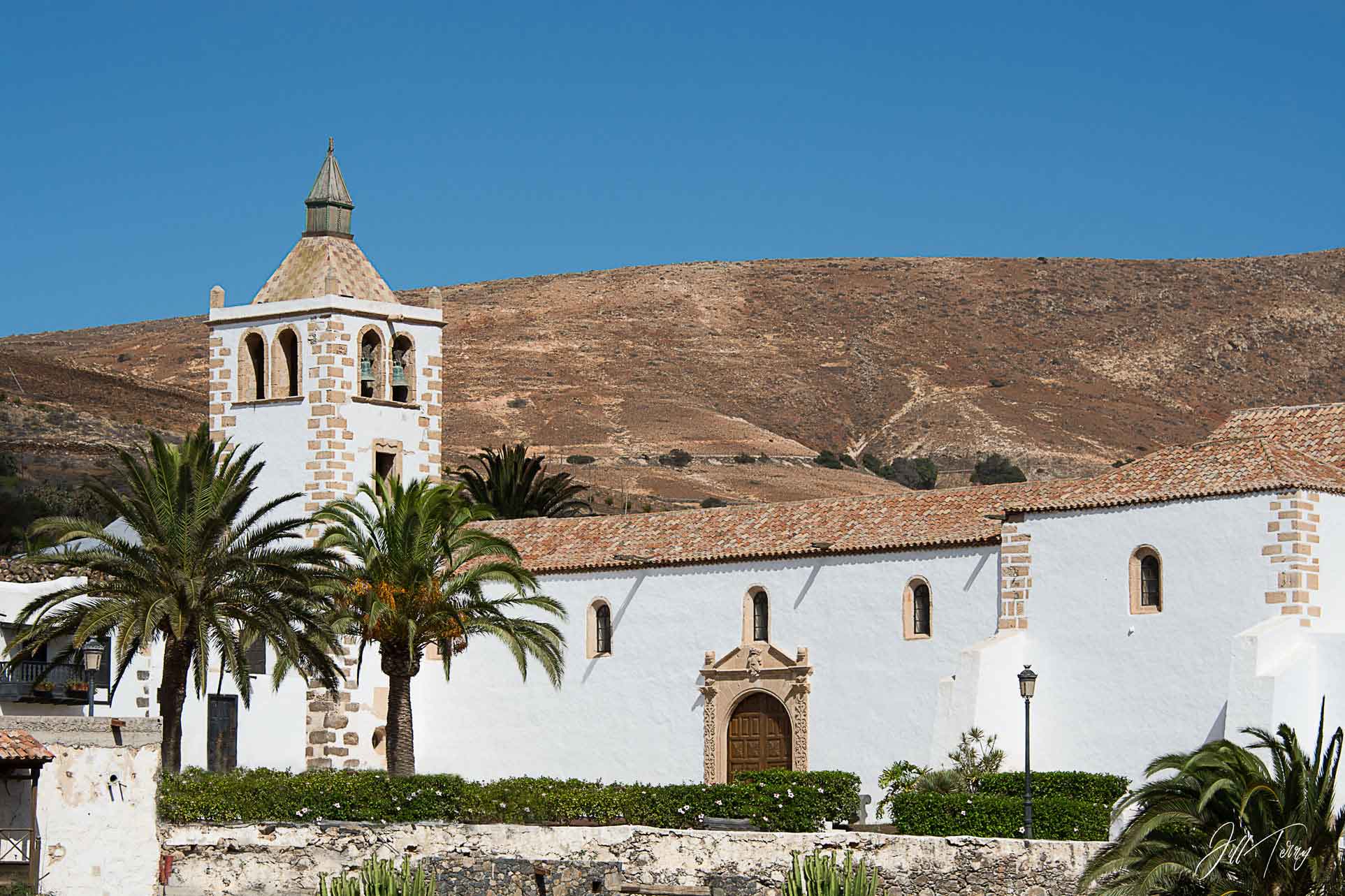
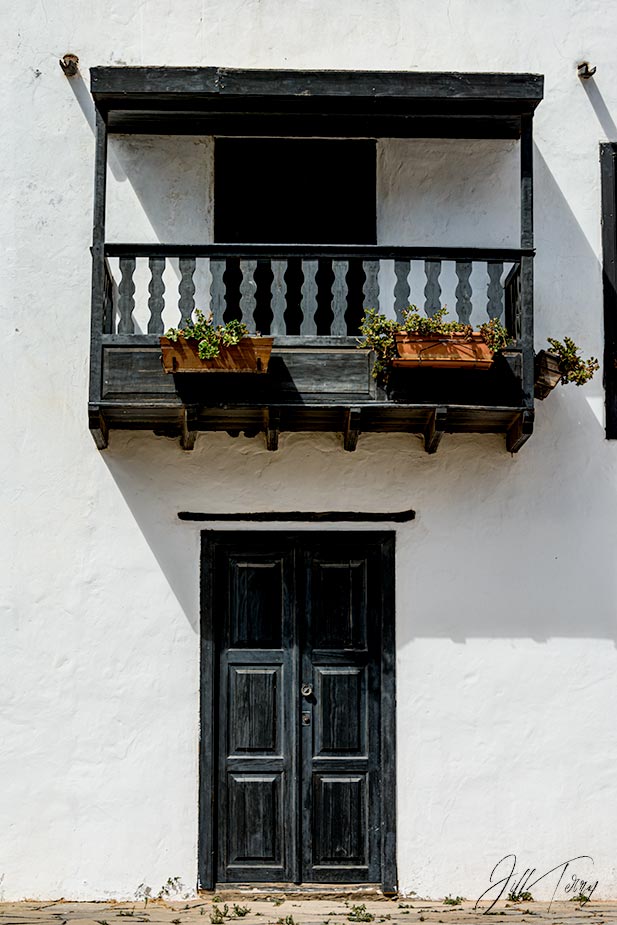
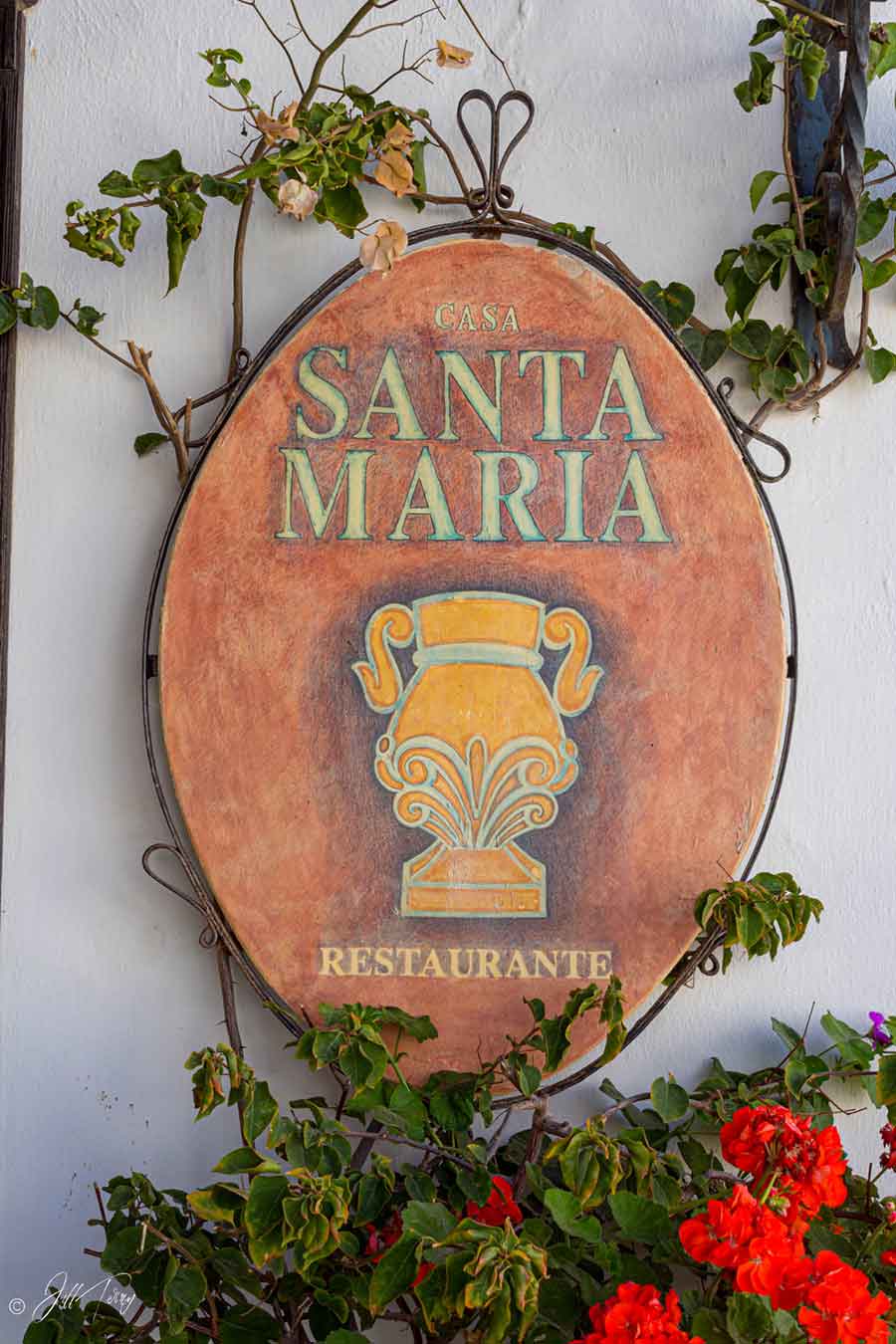
It’s one of those places where the best thing to do is wander without a plan. Around every corner you’ll find flower-filled courtyards, traditional balconies, tiny cafés and beautifully restored historic buildings.
It’s also one of the coolest places on the island — literally. Thanks to its sheltered valley location, Betancuria is often greener and slightly cooler than the coastal resorts.
Santa María Church
At the heart of the town is the Plaza Santa Maria, which is dominated by the Iglesia de Santa María de Betancuria.
Built on the site of the island’s original church, it’s one of the most important religious buildings in Fuerteventura. Only the bell tower is of the original built church, with the main building being reconstructed in the 17th century. Inside you’ll find beautiful wooden ceilings, impressive artwork and a peaceful atmosphere that’s a welcome escape from the midday sun. A nominal charge is made to enter the church, which goes towards its upkeep.
The plaza is one of the most photographed spots in Betancuria. Don’t forget to take time out and simply relax, sitting on one of the benches, watching the world go by and soaking up the peace and serenity of the area.
Wander Around the Historic Centre
The historic centre has been protected as a heritage site since the late 1970s.
Take your time exploring:
- Whitewashed Canarian houses.
- Cobbled streets.
- Traditional wooden balconies.
- Small artisan shops.
- Hidden courtyards full of bougainvillea and cactus.
It’s the sort of town where every street seems to end with another postcard-worthy photo.
Archaeological and Ethnographic Museum
If you’d like to understand Fuerteventura beyond its beaches, this museum is well worth visiting. It tells the story of the island’s first inhabitants, the Majorero, along with traditional island life, farming, crafts and archaeology. Entry is free and it’s small enough to explore in under an hour.
The Sacred Art Museum
Located near the church, this museum displays religious artefacts, paintings and sculptures that tell the story of Betancuria’s importance in Fuerteventura’s history.
Where to Eat in Betancuria
Betancuria is famous for traditional Canarian food.
Some local favourites include:
- Majorero goat’s cheese.
- Goat meat (a local speciality).
- Canarian potatoes with mojo sauce.
- Homemade cakes and pastries.
- Fresh coffee in the town square.
Many restaurants have shaded terraces overlooking gardens or the church square, making it a lovely place for a long lunch.
Is Betancuria Good for Shopping?
Yes — but don’t expect big shopping centres. Instead you’ll find:
- Handmade jewellery.
- Local pottery.
- Aloe vera products.
- Traditional textiles.
- Locally produced honey and jams.
- Majorero cheese and other island delicacies.
It’s a great place to pick up souvenirs that actually come from Fuerteventura.
Best Time to Visit
Betancuria is lovely all year round, but mornings are particularly peaceful before tour buses arrive.
Spring is especially beautiful, when the valley becomes greener after winter rainfall and wildflowers begin to appear.
If you’re visiting in summer, the town is often a welcome escape from the hotter coastal resorts.
Tips for Visiting Betancuria
- Allow at least 2–3 hours to explore properly.
- Wear comfortable shoes for the cobbled streets.
- Bring a camera — it’s one of the island’s most photogenic town.
- Combine your visit with nearby viewpoints like Morro Velosa or the Guise and Ayose statues.
- Stop for lunch and try some authentic Canarian dishes.
Things to See in Nearby
Walking Around Betancuria
The surrounding valley is popular with walkers and nature lovers. Several hiking routes start or pass through the town, taking you into the Betancuria Rural Park, where you’ll discover volcanic ridges, palm-filled ravines and incredible mountain scenery.
The roads around Betancuria have some of the best viewpoints on the island.
Bring comfortable shoes if you fancy exploring beyond the town streets.
La Finca De Pepe
On the west side of the town, and up above it, is La Finca De Pepe, a working goat farm with a museum, a cheese dairy and a souvenir shop. As well as goats they have donkeys, camels, pigs and even peacocks, most of which you can easily pet. And of course you must taste their cheese!
Convento de San Buenaventura
On the northern edge of the town is the Convento de San Buenaventura, now sadly in ruins with just the walls still standing. Still worth a visit for its history and to feel the wonderful peace and serenity of the area and gardens.
Mirador de Guise and Ayose
A five-minute drive north, you’ll find two enormous bronze statues watching over the valley. Guise and Ayose were the two indigenous kings who ruled different parts of Fuerteventura before the European conquest. The panoramic views across the mountains are absolutely spectacular.
Mirador Morro Velosa
A little further away is Mirador Morro Velosa, designed by the famous Canarian artist César Manrique. From here you can see the island’s volcanic landscape stretching for miles in every direction. It’s easily one of Fuerteventura’s best viewpoints.
Is Betancuria Worth Visiting?
Without a doubt. Betancuria shows a completely different side of Fuerteventura. Instead of beaches and dunes, you’ll find history, culture, mountain scenery and one of the prettiest towns in the Canary Islands.
It’s the perfect reminder that Fuerteventura isn’t just about the coastline — some of its biggest treasures are hiding inland.