Chipmunks and Barbary Squirrels
Spoiler alert: they’re not chipmunks!
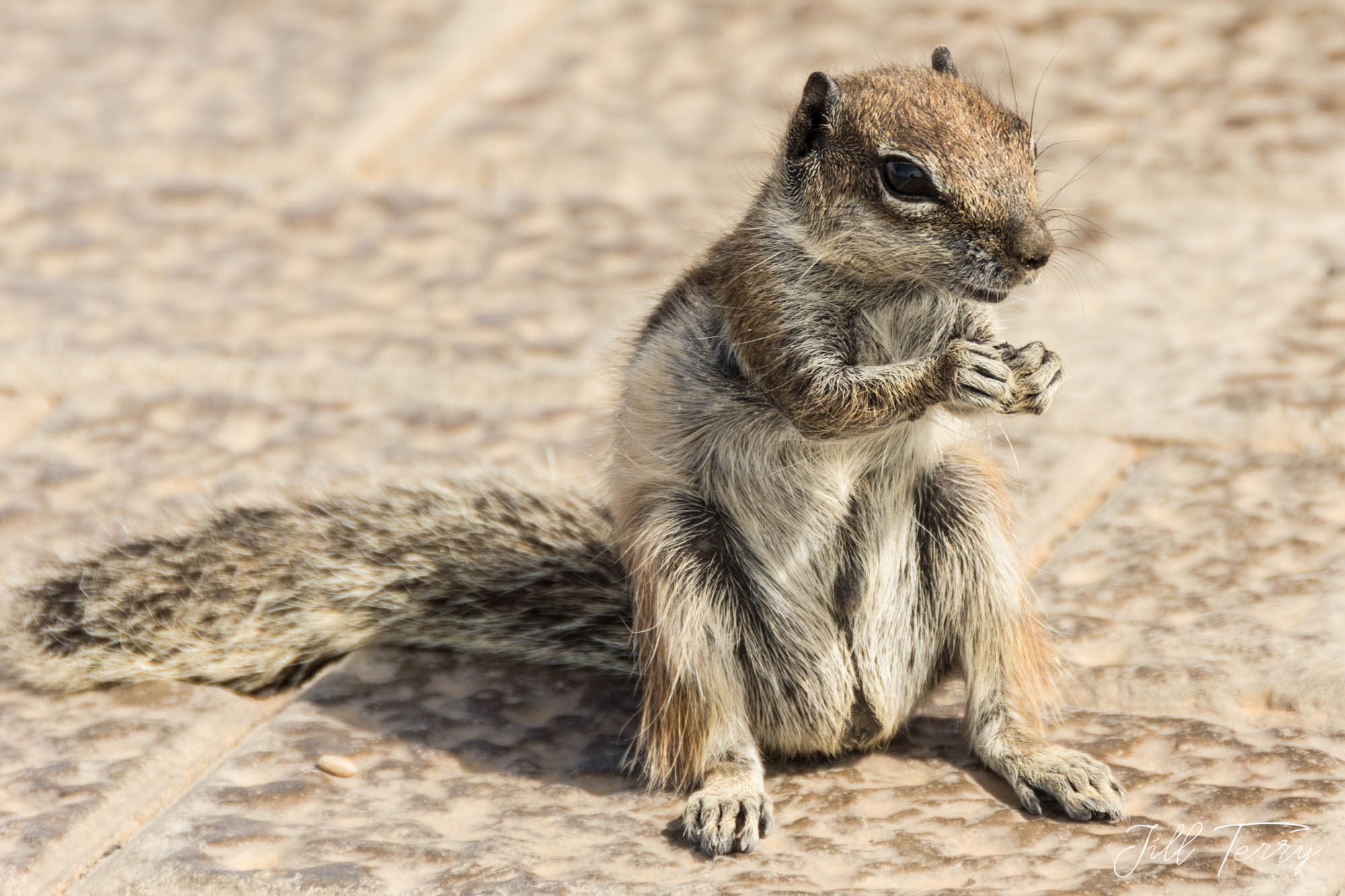
If you’ve been to Fuerteventura, there’s a very good chance you’ve seen one. Small. Brown. Lightning fast. Usually appearing out of nowhere the moment someone opens a packet of crisps.
Almost everyone calls them chipmunks.
Almost everyone is wrong.
Those cute little creatures that seem to live on every rocky hillside and beach path across the island are actually Barbary Ground Squirrels (Atlantoxerus getulus). They’ve become one of Fuerteventura’s most recognisable animals, even though they aren’t native to the island at all.
So where did they come from? Why are they everywhere? And why do locals keep telling visitors not to feed them?
Let’s meet Fuerteventura’s unofficial mascot.
They’re Barbary Ground Squirrels, not Chipmunks
It’s an easy mistake to make. Barbary Ground Squirrels are about the same size as a chipmunk, they have stripes running along their backs, and they dart around rocks with the same energetic enthusiasm. If you’ve never seen one before, “chipmunk” is probably the first word that comes to mind.
The difference is that chipmunks live in North America and parts of Asia. Fuerteventura’s squirrels come from North Africa, specifically Morocco, Western Sahara and Algeria. They’re perfectly adapted to hot, dry landscapes, which explains why they settled into life on Fuerteventura so successfully.
If you’re chatting to locals and call them chipmunks, don’t worry, they’ll know exactly what you mean, but be prepared to be corrected!
How Did Barbary Squirrels Get to Fuerteventura?
Like many island stories, it started with just two animals.
Back in 1965, a resident of Gran Tarajal reportedly brought a pair of Barbary Ground Squirrels back from Sidi Ifni on the North African coast as pets. One escaped. The other was released shortly afterwards. That was enough.
With no natural predators on Fuerteventura and an environment remarkably similar to their native habitat, the population exploded over the following decades. Today they’re found across almost the entire island, from the dunes in the north to the beaches and barrancos in the south. Wildlife experts classify them as an introduced invasive species because they compete with native wildlife and damage crops and vegetation.
Not bad going for two runaway pets.
Why Are They Everywhere?
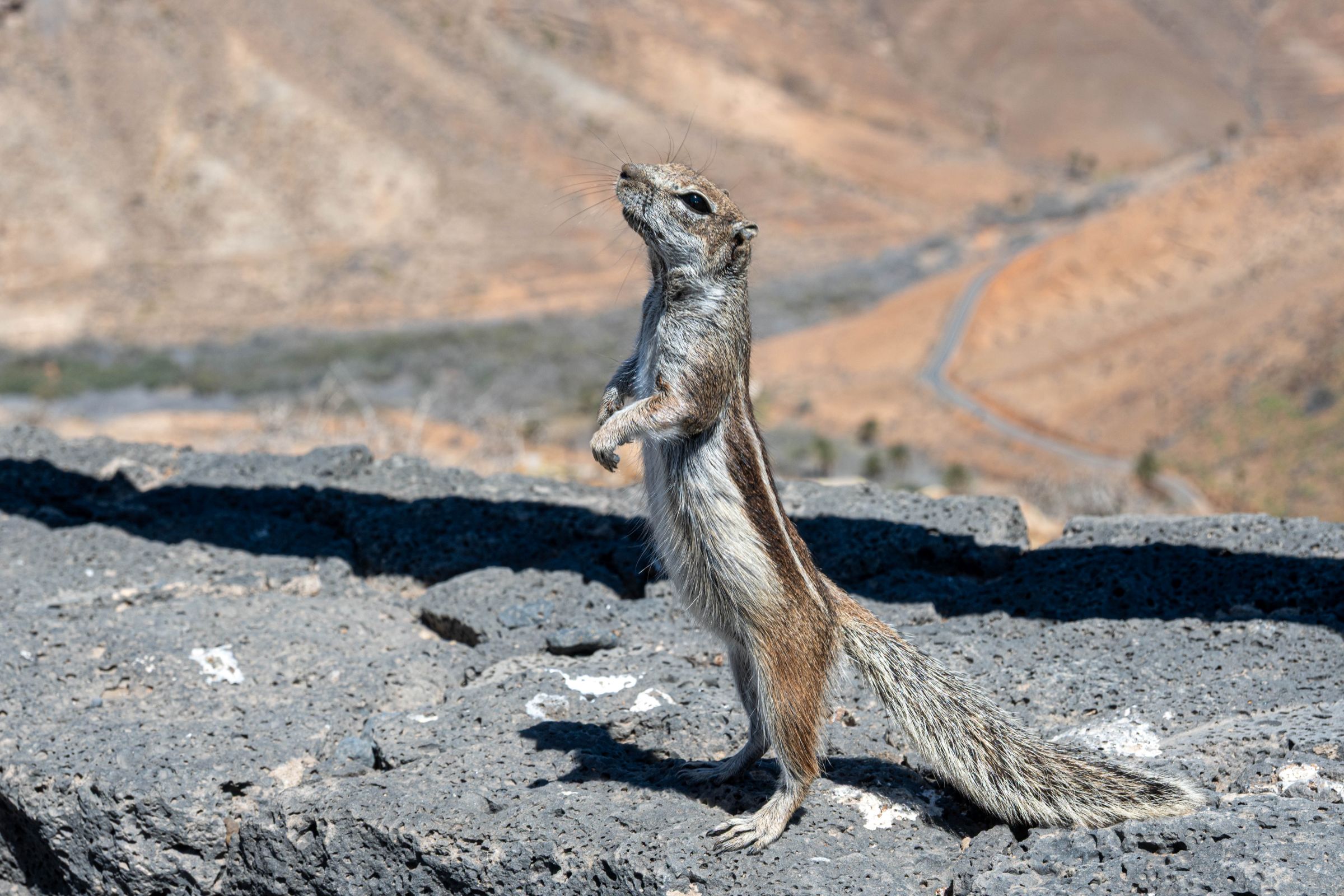
Barbary squirrels are incredibly adaptable. You’ll find them in:
- Rocky coastal paths.
- Dry riverbeds (barrancos).
- Volcanic hillsides.
- Beach car parks.
- Viewpoints.
- Hotel gardens in some resorts.
They’re especially common wherever people stop for a picnic or admire the view. Unfortunately, they’ve learned that tourists often come with snacks.
They’re most active during the morning and late afternoon. In the middle of summer, when temperatures climb well above 30°C, they disappear under rocks and into burrows until it cools down. So if you’ve walked somewhere at lunchtime and wondered where all the squirrels have gone, they’re probably having a siesta.
The Best Places to See Barbary Squirrels in Fuerteventura
If seeing the famous “chipmunks” is on your holiday checklist, you won’t have to look very hard.
Caleta de Fuste Coastal Path
This is probably where most visitors meet their first squirrel. The rocky path between Caleta de Fuste and Nuevo Horizonte has dozens of burrows tucked into the lava rocks. Early mornings and evenings are usually the busiest times.
Mirador de Las Peñitas
The viewpoints around Las Peñitas are famous for birds, dramatic scenery… and very confident squirrels.
Corralejo Natural Park
Look around the volcanic rocks on the edges of the dunes rather than the sand itself.
Ajuy and the West Coast
The rocky cliffs around Ajuy are another reliable place to spot them.
Betancuria Valley
The old capital has plenty of squirrels around picnic areas and viewpoints.
Honestly, once you’ve spotted one, you’ll probably start seeing them everywhere.
Should You Feed the Squirrels?
This is the part that surprises many visitors.
The official advice is: please don’t feed them.
For years, feeding squirrels became almost a tourist attraction. Some squirrels became so used to people that they’d climb onto shoes, bags or even hands looking for food. It looks cute. It’s not great for the squirrels.
Feeding them:
- Changes their natural behaviour.
- Encourages them to gather around busy tourist areas.
- Can spread disease between animals.
There are signs in several popular locations asking visitors not to feed them, and the Canary Islands Government includes the Barbary Ground Squirrel on its invasive species management programmes.
Take photographs instead. They’re much healthier souvenirs.
Why Are They Considered an Invasive Species?
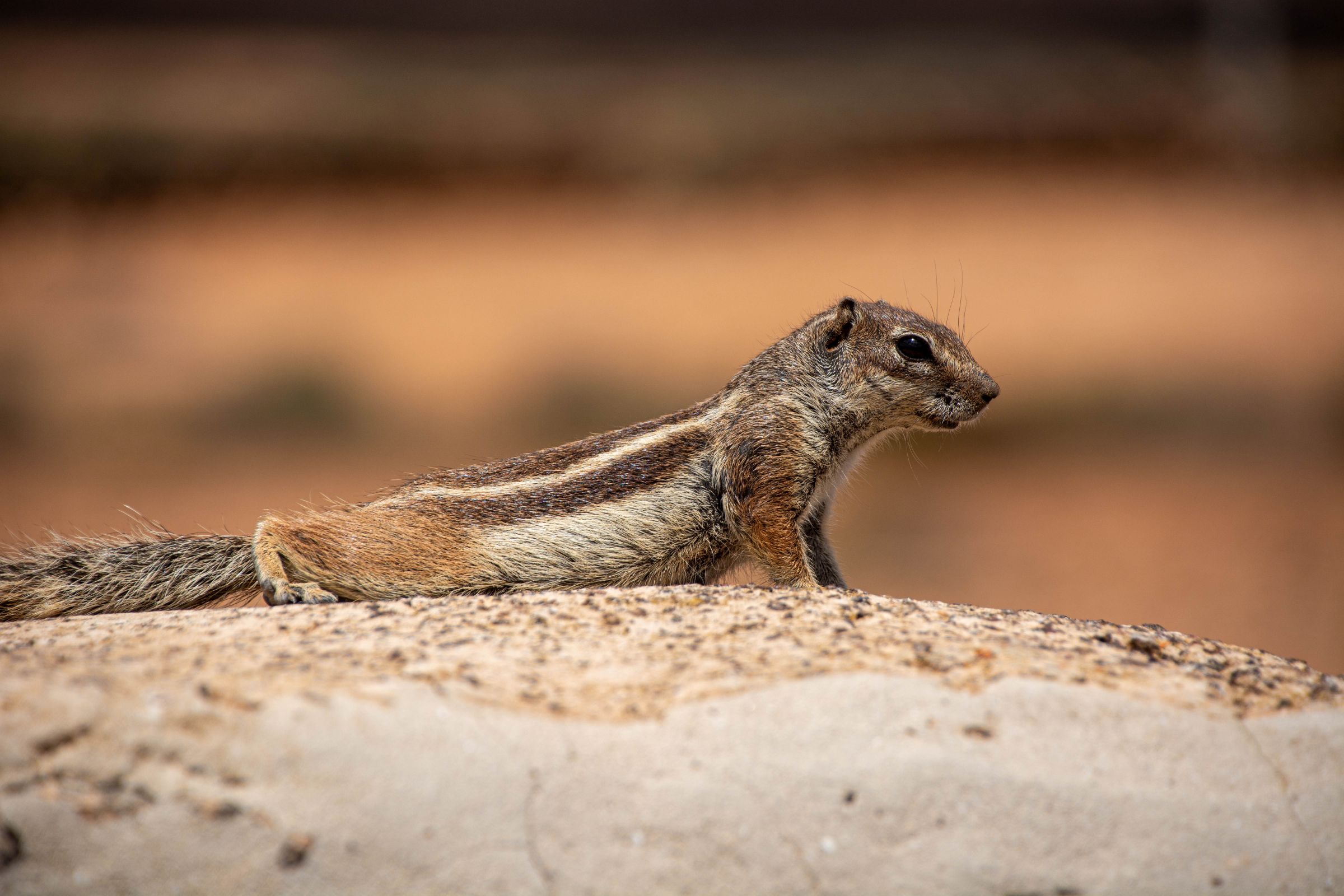
It’s easy to fall in love with Fuerteventura’s squirrels. They’re undeniably cute, but scientists see a very different side to them.
The Barbary Ground Squirrel is officially classified as an invasive alien species in Spain because it damages one of the Canary Islands’ most fragile ecosystems. Fuerteventura evolved for thousands of years without any native ground squirrels, so many plants and animals have no natural defences against them. Research by the Spanish National Research Council (CSIC) has shown that the squirrels eat huge numbers of seeds from native plants, destroying many before they have a chance to germinate. At the same time, they spread the seeds of invasive plants — particularly prickly pear cactus (Opuntia) — helping those species colonise even more of the island. Scientists describe this as an “invasional meltdown”, where one invasive species actively helps another spread.
The impact doesn’t stop there. Barbary squirrels compete with native wildlife for food and shelter, raid bird nests for eggs, feed on insects and reptiles, and can damage young crops and endemic vegetation. Because island ecosystems like Fuerteventura’s contain species found nowhere else on Earth, even a small change in the food chain can have a ripple effect across the landscape. That’s why conservationists continue to monitor squirrel populations and work hard to prevent them spreading to Lanzarote and the other Canary Islands.
What Do Barbary Squirrels Eat?
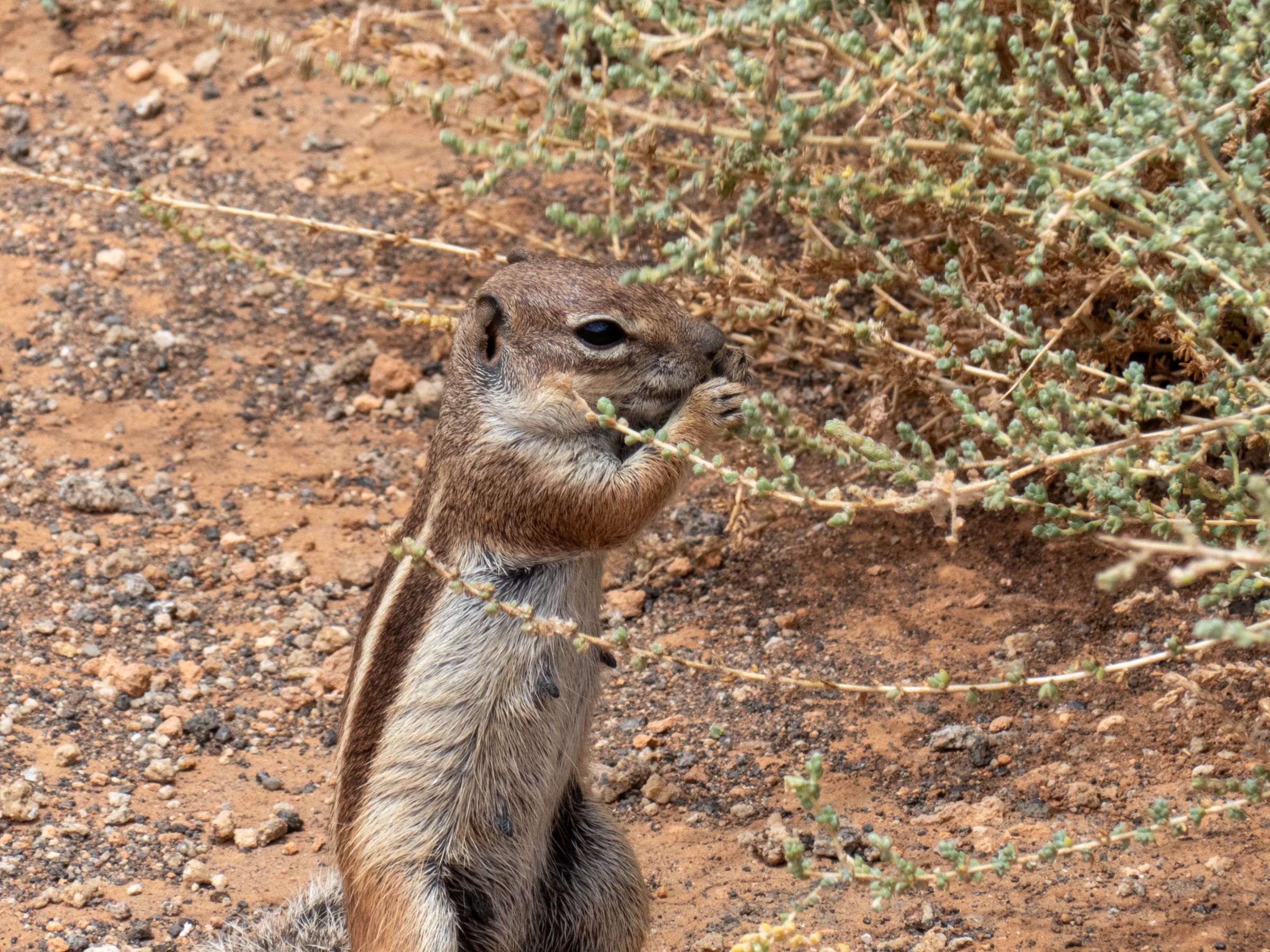
In the wild, they’re opportunistic feeders. Their diet includes:
- Seeds.
- Fruits.
- Flowers.
- Roots.
- Insects.
- Eggs and occasionally small reptiles.
In tourist areas they’ve also developed a taste for biscuits, bread, crisps and pretty much anything dropped on the floor. Which isn’t exactly part of a balanced squirrel diet.
Are They Dangerous?
Not really. They’re wild animals rather than pets, but they’re generally harmless if left alone.
A few things worth knowing:
- They can bite if they think you’re holding food.
- Don’t try to pick one up.
- Keep children from chasing or cornering them.
- Wash your hands if one touches food or belongings.
They’re much happier watching you from a nearby rock.
Why Do People Think There Are Fewer Squirrels Now?
This question comes up surprisingly often.
Visitors who’ve been coming to Fuerteventura for years sometimes say there seem to be fewer “chipmunks” in places where they used to see dozens. Usually there’s a much simpler explanation than a cull.
Possible reasons include:
- They’re sheltering from extreme heat.
- You’re visiting at a different time of day.
- They’re already full because other visitors have been feeding them.
- Local populations naturally move between nearby rocky areas.
The squirrels are still widespread across Fuerteventura, even if one particular viewpoint seems quieter on a given day.
Do Barbary Squirrels Live on Other Canary Islands?
This is something many people don’t realise. Despite their huge population on Fuerteventura, they’re not established on the other Canary Islands. Authorities work quite hard to keep it that way.
In 2026, environmental officers in Lanzarote captured a Barbary squirrel after it had hidden inside a rental car arriving on the ferry from Fuerteventura. It was removed before it could establish a population, and visitors travelling between islands are encouraged to check vehicles for stowaway squirrels.
It’s a reminder that even one squirrel can become an ecological problem on another island.
A Few Fun Barbary Squirrel Facts
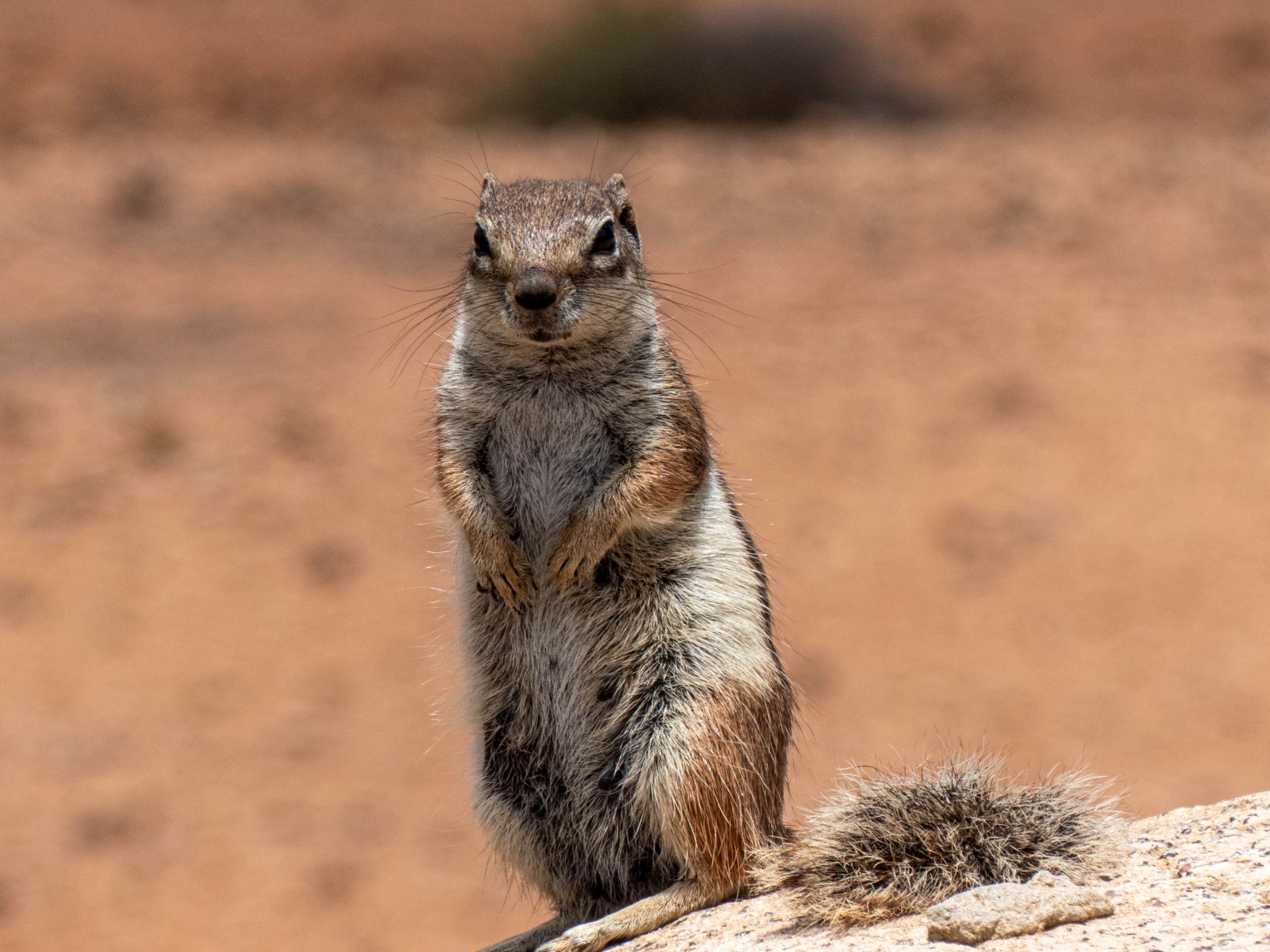
- They’re one of the few squirrel species that happily live in desert climates.
- They communicate with whistles and chirping calls to warn each other of danger.
- They live in underground burrow systems hidden beneath rocks.
- They can survive long periods with very little water.
- Their bushy tails help with balance and also provide shade while resting in the sun.
They’re surprisingly resourceful little animals.
One of Fuerteventura’s Most Photographed Animals
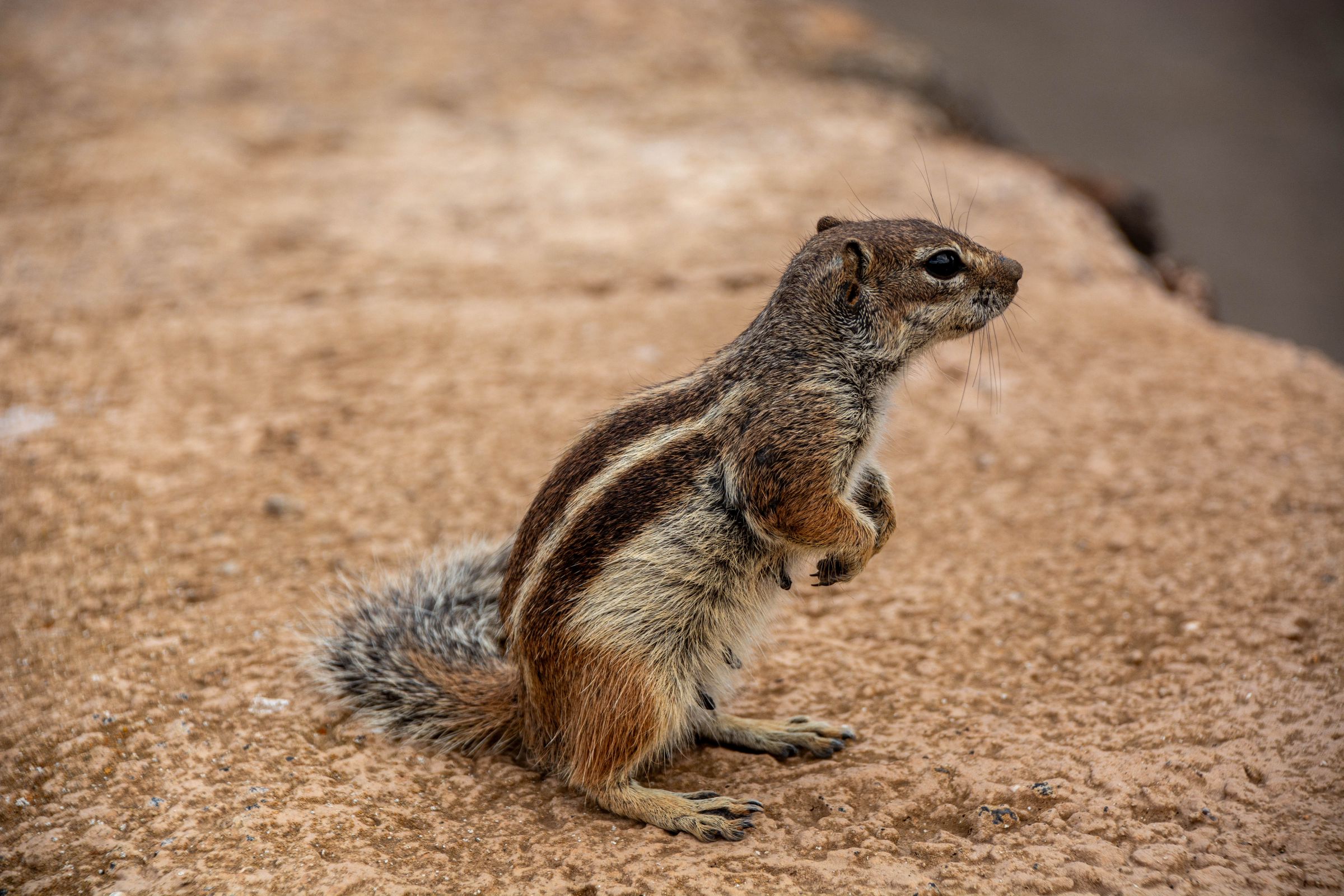
Whether you call them chipmunks or Barbary squirrels, they’re part of the Fuerteventura experience.
You’ll probably spot one while watching a sunset, walking to a beach, or stopping at a mirador with a camera in your hand. They’ll appear, pause just long enough for a photograph, then disappear between the rocks as quickly as they arrived.
Just remember: admire them, photograph them… but leave the snacks in your bag. They’re wild animals, and Fuerteventura is a healthier place when they stay that way.